Rgb Led Lights have moved beyond decorative strips and gaming desks. They now serve bedrooms, retail displays, studios, hospitality spaces, and outdoor areas. Global buyers need more than bright colors. Voltage compatibility, heat control, app stability, waterproofing, and warranty support can determine real value.
The International Energy Agency reports that lighting uses about 15% of global electricity. The U.S. Department of Energy states that residential LEDs use at least 75% less energy and can last up to 25 times longer than incandescent lamps. These figures explain the appeal of LED technology, but RGB performance requires closer inspection. Color accuracy, white-light quality, brightness at distance, and controller response vary widely between models.
Small details matter.
This guide compares ten leading options for international purchasing. It considers lumen output, RGB color control, addressable effects, installation hardware, power adapters, safety certifications, and regional availability. Products with clear specifications and dependable support receive greater attention. IP ratings are also examined, especially for balconies, bathrooms, and commercial displays. An IP65 strip, for example, may resist water jets but still require careful protection at its connectors.
Some conclusions remain imperfect. Manufacturer brightness claims may use different testing methods. App features can change after software updates. Shipping costs and electrical standards also differ by country. Therefore, this selection combines industry evidence with practical buying judgment, rather than promising one universal winner. The best choice depends on room size, lighting purpose, installation skill, and long-term operating expectations.
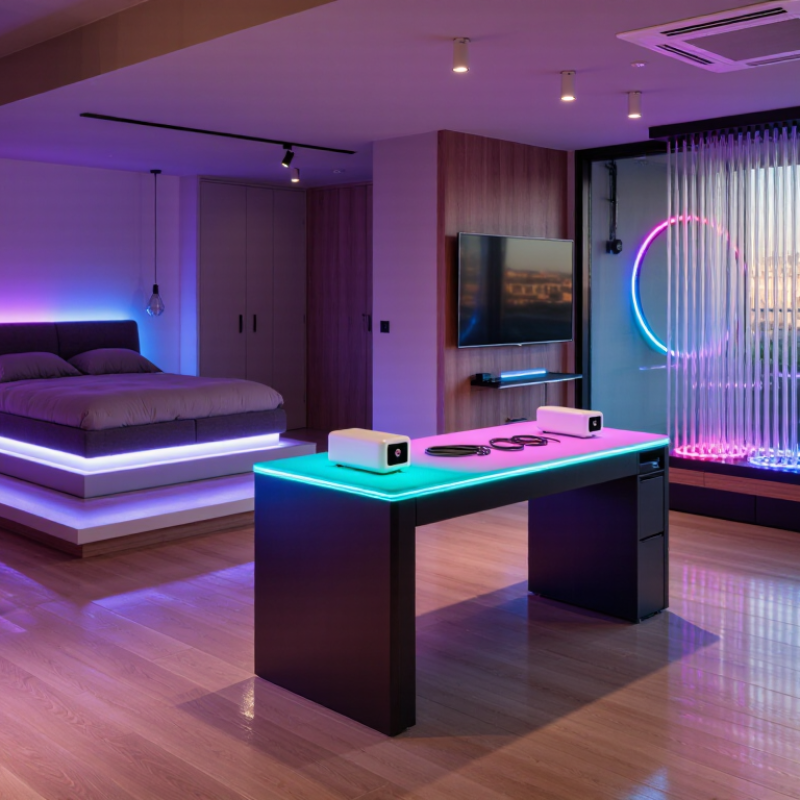
RGB LED lights combine red, green, and blue diodes to create adjustable colors. Their performance depends on more than brightness. Buyers should examine color consistency, heat control, power input, and control compatibility before ordering for another country.
Voltage is critical. A light designed for one electrical system may need a compatible driver elsewhere. Check input range, frequency, plug style, and installation requirements. Look for recognized safety testing and clear documentation. Certifications vary by market, so local compliance should be verified before purchase. It is easy to overlook this detail.
Water resistance matters outdoors. An IP rating can indicate protection against dust and moisture, but installation still affects reliability. Sealed connectors, drainage, and correct mounting prevent many failures. Indoor products may need better color rendering rather than stronger output. For retail displays, studios, and hospitality spaces, accurate white tones can be more useful than dramatic effects.
Control options also shape daily use. Wired controllers can be stable, while wireless systems need dependable range and secure setup. Check whether the light supports dimming, scene storage, and common control protocols. Shorter cable runs often reduce voltage loss. Not always, but often.
From practical comparisons, thermal design deserves serious attention. Aluminum channels, ventilation, and moderate brightness can extend service life. A low price may hide weak adhesives or difficult replacement parts. I still recheck power calculations twice. Product specifications can be incomplete, translated poorly, or changed without clear notice. Ask for test reports, sample units, warranty terms, and shipping measurements before placing a large order.
RGB LED lights are not one universal product. For global buyers, the right category depends on the application, mounting surface, climate, and control system. Flexible RGB LED strips suit cabinets, display shelves, bedrooms, and entertainment walls. They create smooth accent lighting when installed inside aluminum channels. The channel reduces visible hotspots and helps release heat. Measure the strip length carefully. Small errors matter.
RGB LED bulbs work well in lamps, retail displays, and temporary decorative setups. They are easy to replace, but their beam angle may leave dark corners. RGB LED panels provide broader, softer light for studios, offices, gaming rooms, and hospitality spaces. Check brightness, color consistency, and controller compatibility before ordering. A vivid red does not always mean accurate white light. For detailed work, an RGBW or tunable white model may perform better.
Outdoor applications need a different category. Weather-resistant strips, wall washers, and compact floodlights can highlight paths, facades, gardens, and signs. Look for a suitable IP rating, protected connectors, UV-resistant housing, and a stable low-voltage power supply. Local voltage standards also require attention. I once underestimated cable distance on a garden installation, and the far end looked noticeably dimmer. That mistake changed my buying checklist. Specifications help, but real installation conditions still deserve a careful test.
LED density is a practical comparison factor for RGB strip lights. Lower-density products are commonly used for decorative ambient lighting, while higher-density versions are preferred for continuous illumination, signage, photography, and architectural projects. Values represent widely used LED-per-meter configurations across the global market.
Choosing among the 10 best RGB LED lights for global buyers requires more than comparing brightness or color effects.
Check the input label first. A 100–240V, 50/60Hz power supply supports many regions, but plug shapes still differ. Low-voltage systems, commonly 5V, 12V, or 24V, need the correct certified adapter. Never assume a travel plug changes voltage.
Safety markings matter. Look for testing aligned with IEC 60598, regional electrical rules, and suitable electromagnetic compatibility requirements. For kitchens, balconies, or bathrooms, an IP65 or higher rating can resist water jets, while IP20 is intended for dry indoor spaces.
The U.S. Department of Energy’s 2023 SSL R&D Opportunities report notes that LED products can deliver substantial efficiency gains, but poor drivers may reduce real-world performance.
Heat remains a practical issue.
Leave space around controllers and power supplies.
Installation should also match the building. Measure the run, calculate total wattage, and select a power supply with roughly 20% spare capacity.
For example, a 24V strip rated at 10 watts per meter needs at least 120 watts for a 10-meter installation.
That estimate is easy to miss. Longer runs may show weaker colors near the far end, so parallel wiring can help.
Follow local wiring rules, especially in commercial spaces. Independent safety reports and conformity documents are more useful than attractive packaging.
I would not rank any light as universally best; climate, voltage, mounting surface, and replacement access can change the decision.
Choosing the best RGB LED light starts with the market, not the color menu. A bedroom product needs soft brightness and simple controls. A retail display may require stronger output, accurate color mixing, and scheduled scenes. Ask where the light will operate. Measure twice.
Check local electrical requirements before comparing features. Confirm the correct voltage, plug type, wireless frequency, and safety documentation. Outdoor buyers also need a suitable ingress protection rating. Humid balconies and dusty workshops demand different protection levels. A low price means little if replacements are difficult to obtain.
Review the light’s actual performance, not only its advertised color range. Look for stable dimming, even diffusion, low heat, and reliable app or remote control. For professional spaces, color consistency matters more than dramatic effects. RGBW models can produce more natural white light than standard RGB units. Test samples for flicker with a phone camera. It is not a perfect test, but it can reveal problems quickly.
Supply conditions deserve equal attention. Check spare controllers, cable length, packaging strength, and warranty response time. I once underestimated cable compatibility during a small installation, creating unnecessary delays. That mistake changed my buying checklist. Consider repair access and user instructions, especially when products will be sold across language markets. A technically impressive light can still fail commercially when setup feels confusing. Keep it practical.
| Rank | RGB LED Light Type | Typical Power & Brightness | Color & Control Features | Voltage / Connectivity | Ingress Protection | Best Market Applications | Key Buying Considerations | Typical Price Range (USD) | Overall Fit |
|---|---|---|---|---|---|---|---|---|---|
| 1 | Addressable RGB LED Strip | 5 V or 12 V; commonly 30–60 LEDs/m; approximately 7–18 W/m at full white, depending on density and LED type. | Individually controlled pixels, animated effects, color chasing, gradients and music-reactive scenes. | 5 V, 12 V or 24 V DC; digital controller required; Wi-Fi, Bluetooth, SPI or USB options. | IP20 for indoor use; IP65 or IP67 versions available. | Gaming roomsRetail displaysEventsSignage | Check controller compatibility, voltage drop, power-injection points, cutting intervals and heat dissipation. | $15–$90 per 5 m | ★★★★★ |
| 2 | RGBW LED Strip | 12 V or 24 V; typically 12–19 W/m; separate white LED channel improves functional illumination. | RGB colors plus dedicated warm-white or cool-white channel; better pastel colors and everyday lighting than RGB-only strips. | 12 V or 24 V DC; four-in-one or five-in-one controller; wired, RF, Wi-Fi or DMX control. | IP20, IP65 and IP67 versions are commonly available. | HospitalityKitchensHotelsArchitectural lighting | Choose white color temperature carefully; confirm channel wiring, power supply capacity and controller output current. | $25–$140 per 5 m | ★★★★★ |
| 3 | RGB Smart Bulb | Typically 6–12 W; approximately 600–1,100 lumens for common household formats. | Millions of colors, dimming, schedules, scenes and voice-assistant integration; many models also provide adjustable white light. | Usually 100–240 V AC; Wi-Fi, Bluetooth, Zigbee or Matter-based connectivity depending on the model. | Normally IP20 and intended for dry indoor locations. | HomesRental propertiesHospitality rooms | Verify regional lamp base, mains voltage, wireless standards, hub requirements and data-privacy expectations. | $8–$45 per bulb | ★★★★★ |
| 4 | RGBIC Light Bar | Approximately 5–15 W per bar; brightness is usually suitable for accent lighting rather than primary illumination. | Segmented RGB effects, screen or music synchronization, scene presets and app-based control. | 12 V or 24 V DC adapter; Bluetooth or Wi-Fi; some systems use USB power. | Usually IP20 for indoor use. | TV backlightingGaming setupsBedroomsProduct displays | Assess synchronization latency, mounting method, cable length, app language and compatibility with local smart-home platforms. | $25–$120 per kit | ★★★★☆ |
| 5 | RGB Neon Flex Light | Typically 8–15 W/m; uniform diffused output with lower visible dotting than bare LED strips. | Continuous neon appearance, static RGB colors, pixel-controlled effects and flexible bending in one direction or multiple directions. | 12 V or 24 V DC; controller options include SPI, DMX, RF and smart control. | IP65–IP67 versions are suitable for many outdoor or semi-outdoor installations. | SignageFaçadesBarsRetail decoration | Check bending direction, minimum bend radius, UV resistance, end-cap sealing and mounting-channel availability. | $30–$180 per 5 m | ★★★★☆ |
| 6 | RGB Outdoor Floodlight | Commonly 20–100 W; approximately 1,500–10,000 lumens depending on optical design and operating mode. | RGB or RGBW output, dimming, preset scenes, timer functions and optional DMX or wireless control. | Usually 100–240 V AC input; some compact models use 12–24 V DC. | IP65 or IP66; outdoor-rated cable glands and corrosion-resistant housing are important. | Building façadesLandscapingOutdoor eventsSign illumination | Compare beam angle, thermal management, surge protection, mounting bracket strength and regional electrical certification. | $35–$300 per unit | ★★★★☆ |
| 7 | RGB Stage PAR Light | Approximately 30–200 W LED power; intended for colored wash lighting rather than high-accuracy white illumination. | RGB, RGBW or RGBA mixing; DMX512 channels, master/slave mode, sound activation and automatic programs. | 100–240 V AC; often includes 3-pin DMX input and output. | Usually IP20 for indoor venues; IP65 models are available for outdoor productions. | ConcertsTheatersWedding venuesClubs | Evaluate fan noise, flicker performance for cameras, DMX channel modes, beam angle and serviceable components. | $45–$350 per unit | ★★★★☆ |
| 8 | RGB Under-Cabinet Light Bar | Approximately 4–12 W per bar; typically 250–800 lumens depending on length and diffuser design. | RGB accent color plus dimming; RGBW versions provide more useful task lighting. | 12 V or 24 V DC adapter; touch, RF, wired, Bluetooth or Wi-Fi control options. | Usually IP20; splash-resistant versions may reach IP44. | KitchensRetail shelvingDisplay cabinetsHospitality | Confirm connector standards, bar length, diffuser quality, adhesive strength and whether a separate driver is included. | $20–$100 per kit | ★★★★☆ |
| 9 | RGB Ceiling Panel | Typically 18–48 W; approximately 1,200–4,000 lumens, with larger panels providing general room illumination. | RGB accent modes, dimming, selectable white temperature on RGBW models and scene programming. | 100–240 V AC with an external or integrated driver; RF, Bluetooth, Wi-Fi or wall-control options. | Generally IP20 for indoor ceilings; moisture-resistant versions are available for selected locations. | OfficesBedroomsRestaurantsCommercial interiors | Check ceiling cut-out dimensions, driver replacement access, glare control, color-rendering quality and local electrical approvals. | $45–$220 per panel | ★★★☆☆ |
| 10 | RGB Fiber-Optic Star Ceiling Kit | Commonly uses a 10–30 W LED illuminator; brightness is decorative and distributed through multiple fiber strands. | Color-changing points, twinkle effects, remote control, gradual fades and programmable scenes. | 12 V or 24 V DC illuminator; RF, Bluetooth or DMX control on advanced systems. | Fiber ends can be installed in suitable indoor or damp-rated environments; the illuminator itself is commonly IP20–IP44. | HotelsHome theatersSpasVehicle interiors | Compare fiber length, strand diameter, light-point count, installation labor, illuminator cooling and replacement parts. | $60–$400 per kit | ★★★☆☆ |