
10 Garden Globe Lights Tips for Choosing the Best Ones
Choosing Garden Globe Lights is not only a style decision. It is a practical exercise in balancing brightness, weather resistance, safety, and atmosphere. A globe may look charming in a product photograph, yet appear harsh beside a quiet flower bed. Its size, material, color temperature, and mounting height can change the entire garden after sunset.
Landscape lighting authority Janet Lennox Moyer offers a useful principle: “Light should reveal the garden, not compete with it.” That idea guides this introduction to the ten most important selection tips. The right Garden Globe Lights should create soft pools of illumination along paths, patios, borders, or trees. They should also withstand rain, humidity, dust, and seasonal temperature changes. Check the IP rating carefully. Consider low-voltage options when installation and maintenance matter.
Small details often decide the result. Frosted globes can reduce glare near eye level. Warm white bulbs usually suit timber, stone, and planting better than sharp blue light. Spacing matters too. Closely placed lights may flatten the garden, while excessive gaps create unsafe dark patches. Less can be more.
A perfect plan can still fail. Reflections from wet paving may become unexpectedly bright. A beautiful fixture may be difficult to clean. Some solar models may struggle through long winter evenings. These imperfections deserve attention before purchase. The following tips examine real-world performance, durability, placement, energy use, and visual comfort, helping you choose lights that remain attractive beyond the first evening.
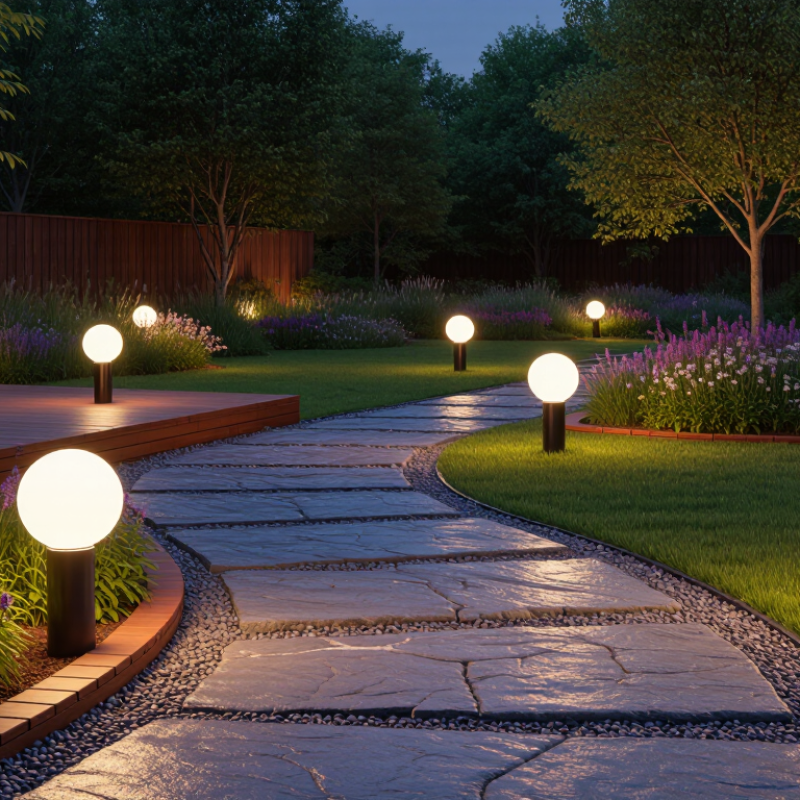
What Garden Globe Lights Are and Where They Work Best
Garden globe lights are outdoor fixtures with a spherical shade around an internal bulb or LED. Their rounded diffuser spreads light in several directions, creating a soft glow instead of a narrow beam. They are decorative lights, not replacements for strong security or task lighting. Think gentle evening brightness. The effect feels calm.
They work especially well along garden paths, beside patios, and near seating areas. Place smaller globes among flower beds to highlight leaves and low plants. Taller fixtures can frame a gate or driveway without overwhelming the space. In my experience, uneven spacing looks more natural than a perfect line. However, crowded globes can produce glare and make a small garden feel visually noisy. Keep them low. Leave breathing room.
When choosing garden globe lights, check the outdoor protection rating and the durability of the shade. Weather-resistant materials matter where rain, frost, or strong sunlight are common. Solar models suit areas without nearby outlets, although cloudy days may reduce their brightness. Wired models usually provide steadier light but require careful cable placement. Warm white light often flatters stone, wood, and greenery. Test one fixture after sunset before buying several. I still sometimes underestimate how bright a globe appears against dark grass. A dimmer setting or wider spacing may work better than expected.
10 Garden Globe Lights Tips for Choosing the Best Ones - What Garden Globe Lights Are and Where They Work Best
Garden globe lights are spherical outdoor light fittings or bulbs, commonly made with glass or weather-resistant plastic. They add ambient or decorative light to patios, paths, lawns, and planting areas. Use this guide to compare common options and choose lights suited to your space.
| # | Choosing tip | What to check | Where it works best |
|---|---|---|---|
| 1 | Choose the right power source | Solar lights need daylight to recharge and may shine for fewer hours after cloudy days. Mains-powered lights provide more consistent operation but need a suitable outdoor electrical supply. | Solar: sunny borders and open lawns. Mains: patios or areas where dependable, regular lighting is important. |
| 2 | Check the outdoor protection rating | Look for an IP rating on the product. IP44 protects against splashing water; IP65-rated enclosures are dust-tight and protected against water jets. The rating applies to the specified product configuration. | Exposed gardens and locations subject to rain; follow the manufacturer’s instructions for installation and use. |
| 3 | Match globe size to the space | Small globes create subtle accents; larger globes are more visually prominent. Compare the listed diameter and allow room around each fitting. | Smaller globes suit narrow paths and planters; larger ones can anchor a lawn, seating area, or broad border. |
| 4 | Select a comfortable brightness | Compare lumens rather than relying only on watts. Lower-output lights generally suit decorative ambience; brighter fittings are more useful for seeing steps and routes. | Soft, low-glare light for seating and planting; more directed or brighter light near entrances and changes in level. |
| 5 | Pick a suitable color temperature | Warm white, often around 2700–3000 K, gives a softer, warmer appearance. Cooler white can look crisper and more pronounced. | Warm white for patios and garden borders; choose a consistent color temperature when combining several lights. |
| 6 | Consider the globe material | Glass can provide a clear, polished look but may break if struck. Outdoor-rated plastic is often lighter and more resistant to impact, though its appearance and longevity vary by material. | Choose sturdier, impact-resistant construction near play areas or busy walkways. |
| 7 | Plan spacing and placement | Check the light’s beam spread and avoid placing globes where they cause glare or obstruct movement. Even spacing usually gives a more orderly look along a route. | Along paths, around a patio edge, or in a repeated pattern among low planting. |
| 8 | Check installation requirements | Confirm whether the fitting is ground-mounted, stake-mounted, or suspended, and whether it requires wiring, an appropriate transformer, or a separate solar panel. Use a qualified electrician where required by local rules. | Ground stakes for lawns and borders; fixed or suspended fittings for structures designed to support them. |
| 9 | Look for replaceable parts and serviceability | Check whether the bulb, battery, or light module can be replaced and whether spare parts are available. Integrated LEDs may not be user-replaceable. | Useful for frequently used areas and installations where replacing the whole fitting would be inconvenient. |
| 10 | Use globes for ambience, not as the only safety lighting | Decorative globes may not illuminate every step or hazard evenly. Assess light coverage at night and add appropriate task or path lighting where needed. | Best as accent lighting for patios, lawns, garden beds, and paths, paired with suitable functional lighting at steps and entrances. |
Related Posts
-
China Best LED Bulbs for Energy Efficiency and Bright Lighting Solutions?
-
Discover the Best Outdoor Globe Lights for Your Space in 2026?
-
Best Yard Globe Lights for Your Outdoor Space Tips and Ideas?
-
Top 10 Outdoor Globe Lights for Stunning Outdoor Spaces?
-
Why Choose Colorful LED Lights for Your Home Decor?
-
10 Best Party Lights to Create an Unforgettable Atmosphere?