10 Solar Globe Lights Buying Tips for Global Buyers

Solar Globe Lights are no longer simple garden ornaments. They combine photovoltaic charging, battery storage, LED efficiency, weather resistance, and visual design. Global buyers must evaluate these elements together, not rely on attractive product photographs. The IEA’s Renewables 2024 report identifies solar PV as the leading source of new renewable power capacity worldwide. That growth supports wider access to solar components, but it does not guarantee reliable decorative lighting. Quality is not obvious. A globe may shine brightly at 7 p.m., then fade before midnight after a cloudy day.

This guide presents ten practical buying tips for importers, retailers, landscape suppliers, and homeowners. It considers panel performance, battery capacity, lumen output, charging time, IP protection, operating temperature, packaging, certifications, warranty terms, and after-sales support. The IEA PVPS Trends 2024 report also documents rapid global photovoltaic expansion, reinforcing the need to understand component quality rather than follow market excitement. For off-grid product references, the GOGLA Global Off-Grid Solar Market Report offers useful insights into product durability, affordability, and consumer access. However, decorative globe lights are not identical to solar home systems. That distinction matters.

Look closely at the details. Check whether the battery is replaceable. Confirm the IP rating with the supplier. Request test reports, not vague promises. Local sunlight, winter temperatures, shipping routes, and installation habits can change performance significantly. No checklist removes every uncertainty. A reflective buying process may feel slower, yet it prevents costly returns, weak reviews, and disappointed customers.
10 Solar Globe Lights Buying Tips for Global Buyers

Define Your Lighting Needs and Globe Placement

Before buying solar globe lights, define the job each fixture must perform. A pathway needs gentle guidance, while a patio may need warmer, wider illumination. The U.S. Department of Energy reports that LED lighting uses at least 75% less energy than incandescent lighting and can last up to 25 times longer. That advantage matters, but solar performance depends on sunlight, battery capacity, and operating hours.

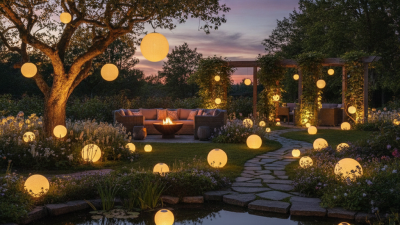
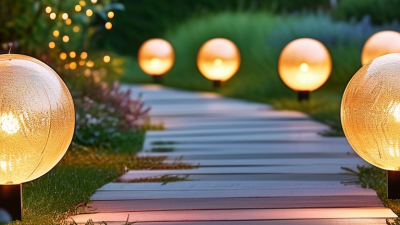
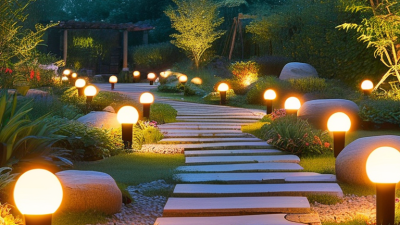
Map the placement at different times of day. A globe under a tree may look attractive at noon, yet receive weak charging light later. Leave roughly 2–3 meters between pathway globes to reduce visual clutter. Place decorative units where their panels face open sky, not walls or dense foliage. In my installation experience, southern exposure often helps in the Northern Hemisphere, but local shading can make this rule unreliable. Check the site, not assumptions.

Weather also changes the buying decision. The International Energy Agency’s Renewables 2024 report identifies solar power as the fastest-growing renewable electricity source, but household products still face seasonal limits. Review the stated autonomy, charging time, battery type, and ingress rating. A product claiming eight hours may achieve less during cloudy weeks. Test one sample for several nights before ordering in volume. I once overestimated winter output. That mistake was avoidable. Choose light color carefully, too; warm white supports relaxation, while cooler light improves pathway visibility but can feel harsh.

Compare Solar Panels, Batteries, Brightness, and Runtime

For global buyers, compare the solar panel before admiring the globe’s shape. Monocrystalline panels usually deliver stronger output in limited space. However, panel wattage alone can mislead. The International Energy Agency reported global solar PV capacity exceeding 1,600 GW by the end of 2023. That growth does not guarantee equal performance in cloudy gardens. Check the panel’s rated power, tilt, shading tolerance, and charging time under local sunlight.

Battery capacity controls the light’s runtime after sunset. Look for watt-hours, not vague claims like “all night.” A 3.7-volt, 2,000-mAh battery stores about 7.4 watt-hours before losses. Real runtime falls with cold weather, aging, and charging inefficiency. The U.S. Department of Energy states that LEDs use at least 75% less energy than incandescent lighting. Still, brighter output drains batteries faster. Balance the mood with the purpose.

Brightness should be measured in lumens, while color temperature affects comfort and visibility. For pathways, modest output may prevent glare; decorative globes need less. Ask whether the advertised runtime uses low mode, full charge, or laboratory conditions. That detail matters. IP ratings, replaceable batteries, and seasonal charging data also deserve attention. I often distrust unusually bright products with tiny panels. They may work briefly, but the specification deserves another look. Check test methods against IEC safety guidance and regional recycling requirements before ordering.

Assess Materials, Weather Resistance, and Safety Standards

Solar globe lights look simple, but outdoor performance depends on hidden details. The IEA PVPS Trends 2024 report recorded about 456 GW of new solar capacity in 2023. This growth supports wider solar lighting adoption, yet small products still vary greatly. Choose UV-stabilized polycarbonate or borosilicate glass. Thin plastic may yellow, crack, or become brittle under intense sunlight. Stainless steel should resist corrosion, especially near coastlines.

Tip: Check the IP code, not vague wording such as “waterproof.” IEC 60529 defines IP65 as dust-tight and protected against water jets. IP67 adds temporary immersion protection. However, seals can weaken after repeated heating, freezing, and impact. Look for drainage design, sealed battery compartments, and replaceable gaskets. I once found condensation inside a supposedly weatherproof lamp after several rainy nights. Ratings are useful, but installation still matters.

Tip: Verify battery and electrical safety documents. Lithium batteries should reference IEC 62133-2 testing, while shipped batteries generally require UN 38.3 transport compliance. For lighting equipment, ask whether applicable regional requirements, such as CE, UKCA, or FCC rules, have been assessed. Certification marks alone prove little without a test report or declaration. The Lighting Global quality framework also emphasizes verified performance and durability for off-grid products. Do not ignore charging protection, low-voltage design, or stable wiring. A brighter globe is not automatically safer.

10 Solar Globe Lights Buying Tips for Global Buyers — Assess Materials, Weather Resistance, and Safety Standards

No. Buying Dimension Recommended Specification or Benchmark What to Check Reason for Global Buyers Practical Assessment
1 Globe Material Choose UV-stabilized polycarbonate for high impact resistance, or acrylic for a clearer appearance and good outdoor durability. Confirm the material declaration, UV-resistance information, wall thickness, and whether the globe remains intact after a basic impact test. Plastic performance varies by climate. UV-stabilized material helps reduce yellowing and brittleness in strong sunlight. Prefer UV-stabilized
2 Frame and Hardware Use corrosion-resistant stainless steel, aluminum, or outdoor-grade coated steel for the support frame and fasteners. Check for rust-resistant screws, secure joints, smooth edges, and a coating suitable for the intended environment, especially coastal areas. Salt spray, humidity, and repeated wet-dry cycles can corrode ordinary steel and weaken the assembly. Outdoor-grade hardware
3 Ingress Protection For permanently exposed outdoor use, look for at least IP44; IP65 provides stronger protection against dust and water jets when certified for the complete product. Verify the IP code under IEC 60529 or an equivalent national standard. Confirm that the rating applies to the assembled light, not only a component. IP ratings are internationally recognized and help buyers compare protection against solid particles and water. IP44 minimum outdoors
4 Solar Panel Quality Check the panel type, rated power, operating voltage, and charging performance under the supplier’s stated test conditions. Request electrical specifications and a charging test. A larger panel does not automatically mean better performance if the controller or battery is undersized. Cloud cover, winter sun, shading, and installation angle differ widely between regions and directly affect charging time. Verify full-system output
5 Battery Chemistry Common options include rechargeable Ni-MH and lithium-ion batteries. The battery must be protected from overcharge, over-discharge, and short circuit. Confirm capacity in mAh or Wh, rated cycle life, operating temperature range, replaceability, and the presence of a suitable protection circuit. Battery capacity and temperature tolerance influence nighttime runtime, seasonal performance, transport handling, and service life. Protection circuit required
6 Nighttime Runtime Use the supplier’s runtime data only when it identifies light output, battery capacity, charging conditions, and operating mode. Ask for separate runtime figures for full brightness, dimming mode, and low-sun conditions. Avoid comparing runtime claims made under different test conditions. Runtime is affected by daylight hours, weather, panel orientation, battery age, temperature, and LED brightness. Compare test conditions
7 Electrical Safety For applicable products, request evaluation against IEC 60598-1 and the relevant part of the IEC 60598 series or an equivalent regional requirement. Check insulation, wiring, strain relief, connector sealing, polarity protection, and whether test reports identify the same model and configuration. Recognized safety testing reduces the risk of electric shock, overheating, fire, and inconsistent production quality. Request valid test reports
8 LED and Light Output Compare luminous flux in lumens, color temperature in kelvins, beam distribution, and color consistency rather than relying only on LED quantity. Confirm the claimed lumens, LED lifetime conditions, color temperature tolerance, and whether the globe produces uniform illumination without excessive hotspots. Color preference and required brightness differ by market, while lumens provide a more useful comparison than wattage alone for LED lighting. Compare lumens and CCT
9 Wind and Mechanical Stability Select a base, stake, or mounting system appropriate for the globe’s size, weight, and expected wind exposure. Review product dimensions, center of gravity, anchoring method, joint strength, and any applicable mechanical or wind-resistance test data. Large spherical surfaces catch wind. Poor anchoring can cause tipping, impact damage, or cable and connector stress. Check anchoring design
10 Compliance and Documentation Request a declaration of conformity, user manual, labeling details, battery information, recycling instructions, and market-specific documentation. Ensure model numbers, ratings, warnings, importer information, and test reports match the shipment. Check applicable requirements for the destination market. Documentation supports customs clearance, safe installation, product traceability, and compliance with local electrical and environmental rules. Match documents to shipment

Note: IP ratings, electrical standards, recycling obligations, labeling rules, and market-access requirements can vary by destination. Always verify the current requirements applicable to the product configuration and sales market.

Match Design, Installation, and Climate Requirements

10 Solar Globe Lights Buying Tips for Global Buyers

A globe light must fit the place, not only the catalogue photograph. IRENA’s Renewable Capacity Statistics 2024 recorded 473 GW of new renewable capacity in 2023, including about 346 GW of solar power. That growth encourages outdoor solar products, but sunlight varies sharply by location. Check Global Solar Atlas data before choosing panel size, battery capacity, or expected nightly runtime. A decorative sphere may look bright in Spain, yet disappoint during winter in northern Europe.

Match the design to the installation surface. Flat lawns need stable ground stakes, while balconies require secure brackets and wind-resistant fixing points. Choose warm light for hospitality areas and softer distribution near bedroom windows. For exposed gardens, IP65 protection is a sensible minimum; IEC 60529 defines it as dust-tight and protected against water jets, not immersion. Salt air, frost, and dust still demand suitable housing materials. Plastic can resist corrosion, but cheap plastic often becomes brittle under strong ultraviolet exposure.

Climate changes performance. Cold weather reduces rechargeable battery efficiency, while long cloudy periods reduce charging time. Tropical buyers should inspect drainage, ventilation, and heat tolerance. Ask for test conditions, lumen measurements, cycle-life data, and replacement-battery availability. Do not trust “all-weather” wording alone. I once underestimated shading from a mature tree; the installation looked perfect, but evening brightness fell badly. That mistake remains useful: measure sunlight at the exact mounting point for several days before ordering.

Review Supplier Reliability, Total Cost, Warranty, and Shipping

When buying solar globe lights internationally, supplier reliability deserves more than a polished catalog. Request a sample batch and inspect five units closely. Check the globe surface, solar panel seal, switch, and stake strength. Charge them outdoors for two clear days. Ask for production photos, inspection records, and realistic monthly capacity. I once trusted a fast reply too quickly, and the delivered finish varied between cartons. That mistake still matters.

Tip 1: Compare total cost, not only the unit price. Include packaging, tooling, sample fees, inland transport, customs charges, and possible replacement units. A cheaper light can become expensive after damaged cartons or weak batteries.

Tip 2: Read the warranty in practical terms. Confirm its length, covered parts, evidence requirements, and replacement process. Ask whether battery performance is measured after a specific number of cycles. Vague promises are difficult to use across borders.

Shipping needs equal attention. Confirm carton dimensions, gross weight, pallet limits, and delivery terms before placing an order. Request a pre-shipment inspection, especially for glass or fragile plastic globes. Track the timeline from production completion to port departure, not just the final delivery estimate. Add buffer days for customs and weather. My own planning has sometimes been too optimistic. A small delay can disrupt seasonal sales, installation teams, and storage space. Reliable communication should include written updates, clear documents, and one accountable contact.

Leave Your Message
Write your message here and send it to us