
7 Tips for Buying Outdoor Lighting Globes?
Buying outdoor lighting can look simple until a globe cracks, glares, or overwhelms a carefully planted garden. Outdoor Lighting Globes must balance appearance, weather resistance, brightness, and energy use. A smoked glass globe may look elegant at dusk, yet reduce useful light after sunset. Small choices matter.
The U.S. Department of Energy reports that LED products use at least 75% less energy than incandescent lighting and can last up to 25 times longer. That evidence supports LED globes for patios, walkways, and entrances. However, efficiency alone is not enough. The Illuminating Engineering Society stresses the importance of visual comfort, proper distribution, and controlled glare. DarkSky International also recommends shielding light sources, reducing unnecessary brightness, and protecting nighttime visibility.
Lighting designer Howard Brandston wrote, “Light is not a thing; it is an event.” His observation is useful here. A globe changes how people experience a doorway, a terrace, or a quiet path. It can create warmth, but poor placement can disturb neighbors and wildlife. The U.S. Department of Energy’s Solid-State Lighting reports also emphasize color quality, optical control, and responsible design.
This guide examines seven practical buying tips. We will consider materials, IP ratings, bulb compatibility, color temperature, size, installation, and maintenance. Some advice may seem obvious. It is not always followed. Measure the mounting space before shopping. Check the fitting twice. A beautiful globe is still a poor purchase if rain enters the socket or replacement parts disappear. Reliable lighting begins with details, not decoration.
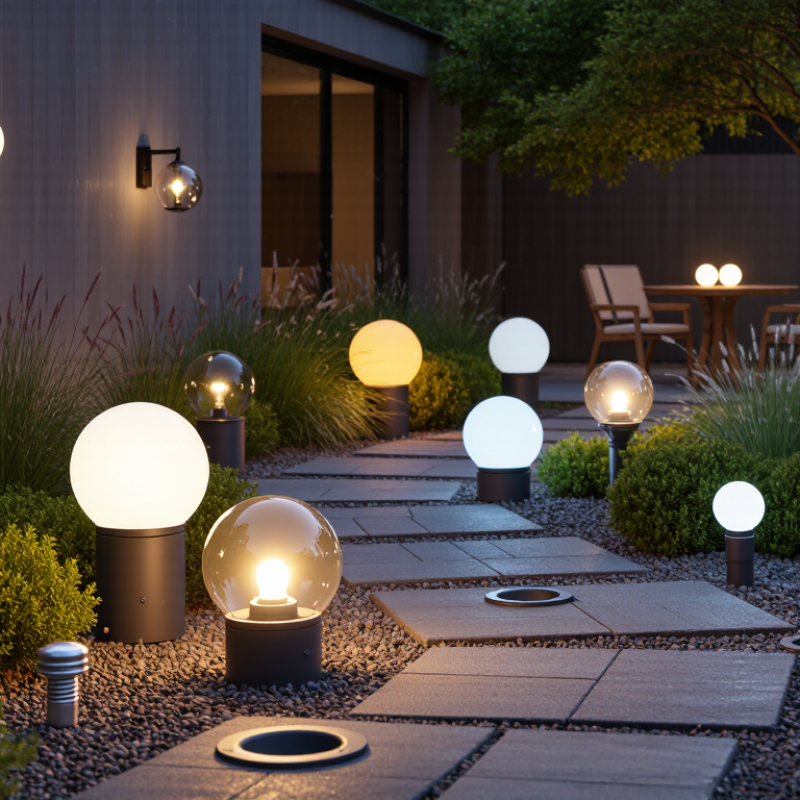
Define Outdoor Lighting Globe Types and Their Intended Uses
Outdoor Lighting Globe Types and Their Intended Uses
Outdoor lighting globes are not interchangeable decorations. Each type controls brightness, glare, durability, and visual comfort. Clear glass globes produce crisp, direct light for entrances, driveways, and security-focused areas. They can also create harsh shadows. Frosted globes soften the beam and suit patios, seating areas, and dining spaces where people remain nearby. Soft light matters.
Seeded or textured glass scatters light through small patterns. It works well beside doors and garden walls because fingerprints and minor dust are less noticeable. Acrylic and polycarbonate globes are lighter and more impact-resistant than glass. They are practical for busy walkways, children’s areas, and exposed fixtures. Not every globe fits.
The fixture’s location should guide the purchase. A globe near sprinklers or coastal air needs weather-resistant materials and an appropriate outdoor protection rating. Check the socket size, globe diameter, mounting method, and lamp heat limit before ordering. A large globe may look balanced in a showroom but overwhelm a narrow porch. Measure twice. Clear globes often need lower-brightness lamps to reduce glare, while frosted globes may require more output for the same visible effect. It is easy to focus on appearance and forget maintenance. Dust, insects, and trapped moisture can change the light dramatically. Inspect the seal and drainage path, even when the product looks well finished.
7 Tips for Buying Outdoor Lighting Globes? — Define Outdoor Lighting Globe Types and Their Intended Uses
| Tip | Outdoor Lighting Globe Type | Typical Construction | Light Distribution and Appearance | Best Intended Uses | Key Buying Checks | Practical Notes |
|---|---|---|---|---|---|---|
| 1 | Clear Glass Globe | Transparent glass with a smooth, polished surface. | Provides direct, crisp light and clearly reveals the lamp inside. It generally creates more visible glare than opaque or frosted globes. | Decorative post lights, entryways, porches, patios, and areas where the lamp is part of the visual design. | Check lamp brightness, glare control, socket size, and whether the globe is rated for outdoor exposure. | A warm-color lamp can make clear glass feel less harsh in residential settings. |
| 2 | Frosted or Opal Globe | Etched, frosted, or milky glass that diffuses the light source. | Produces softer, more evenly distributed light with reduced lamp visibility and lower perceived glare. | Front doors, walkways, balconies, outdoor seating areas, and locations used frequently at night. | Confirm that the globe still allows enough light output and that its finish will not trap excessive heat around the lamp. | Diffused globes are often a comfortable choice for pedestrian-level lighting. |
| 3 | Seeded or Textured Glass Globe | Glass containing small bubbles, ripples, or other embedded textures. | Creates decorative sparkle and breaks up the view of the lamp while maintaining moderate light transmission. | Gardens, verandas, feature walls, courtyards, and period or rustic-style exterior fixtures. | Inspect the texture for consistent quality and verify that cleaning access is practical. | Texture can hide minor dust but may require more careful cleaning than a smooth globe. |
| 4 | Acrylic or Polycarbonate Globe | Impact-resistant plastic designed for lighter weight and improved resistance to breakage. | Available in clear, frosted, or colored finishes; light distribution depends on the surface treatment. | Public-facing walkways, busy households, play areas, coastal properties, and fixtures that may experience accidental impact. | Look for UV resistance, outdoor suitability, impact resistance, and compatibility with the fixture’s heat limits. | Plastic globes are less likely to shatter, but lower-quality materials may discolor after prolonged sunlight exposure. |
| 5 | Globe for Enclosed Fixtures | A globe fitted inside a lantern, cage, or protective housing. | Offers a controlled decorative appearance while the surrounding fixture adds mechanical protection and helps shield the light source. | Driveways, exposed porches, service entrances, garages, and locations subject to wind, rain, or accidental contact. | Verify the complete fixture’s outdoor rating, ventilation, globe dimensions, and the lamp’s enclosed-fixture suitability. | An enclosed globe can retain heat, so the lamp must remain within the fixture manufacturer’s stated limits. |
| 6 | Low-Voltage Landscape Globe | A globe used with a low-voltage landscape-lighting system, commonly supplied through a transformer. | Usually provides gentle accent or pathway illumination rather than broad-area lighting. | Garden borders, planting beds, short paths, steps, water features, and decorative landscape groupings. | Match the globe’s voltage and wattage with the system, check cable distance, and use suitable outdoor connectors. | Low-voltage systems still require weather-resistant components and correct installation practices. |
| 7 | Globe with Outdoor Safety Rating | Glass or polymer globe designed for use as part of a fixture suitable for outdoor conditions. | Light distribution varies by shape and finish; the critical feature is resistance to moisture, dust, temperature changes, and normal outdoor exposure. | Any permanently installed exterior light, especially in areas exposed to rain, irrigation, humidity, or coastal air. | Confirm the fixture’s IP or equivalent outdoor rating, electrical compatibility, sealing condition, drainage, and corrosion-resistant hardware. | The globe alone does not determine safety; the complete light fitting, wiring, installation, and environment must be suitable. |
Related Posts
-
10 Garden Globe Lights Tips for Choosing the Best Ones
-
Best Patio Globe Lights for 2026 Trends and Style Ideas?
-
China Top Blow Molded Christmas Lights Trends and Innovations?
-
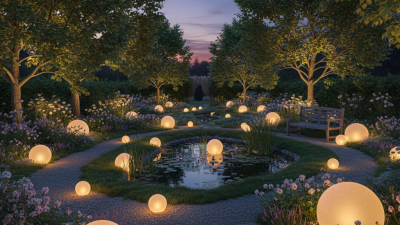
China Best Lawn Globe Lights for Your Garden Decor Ideas?
-
What Are the Benefits of Floating Water Lights for Events?
-
Top Solar Globe Lights for Outdoor Spaces How to Choose the Best?