The market for seasonal lighting continues to expand as households invest in brighter, safer, and more reusable displays. The National Retail Federation reported that U.S. holiday spending reached approximately $964.4 billion in 2023. Its 2024 forecast placed spending between $979.5 billion and $989 billion. These figures show strong demand, but they do not isolate Christmas lighting purchases.
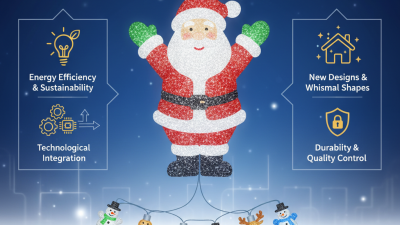
Blow Molded Christmas Lights remain distinctive because they combine molded plastic bodies with internal illumination. A glowing Santa, reindeer, or snowman can create instant curb appeal. Product quality depends on mold precision, plastic thickness, wiring protection, color stability, and outdoor durability. The U.S. Department of Energy states that LED bulbs use at least 75% less energy than incandescent bulbs and last up to 25 times longer. That advantage matters for large displays operating for several weeks.
This overview examines ten manufacturers through practical and commercial criteria. These include design variety, manufacturing experience, material consistency, lighting technology, safety documentation, customization, order capacity, and after-sales support. Public data rarely separates Blow Molded Christmas Lights from the broader holiday decoration market. That is a limitation worth recognizing. Rankings can also change when a supplier updates its factory, certifications, or product range.
Real-world details matter. A manufacturer may offer a beautiful sample, yet fail during a container-scale order. Another may provide efficient LEDs but limited replacement parts. Buyers should compare technical sheets, sample units, warranty terms, and production photographs. The goal is not to declare one universal winner. It is to identify manufacturers that demonstrate dependable performance, credible expertise, and measurable value for retailers, distributors, municipalities, and commercial display installers.

Blow molded Christmas lights are seasonal decorations shaped from heated plastic. Manufacturers place plastic resin inside a hollow mold, then use air pressure to push it against the mold’s walls. The finished shell becomes a three-dimensional figure, such as a candle, bell, snowman, or Santa-style character. It is lightweight, hollow, and usually designed to hold an internal bulb or LED assembly.
The process creates clean contours and repeated shapes with reliable consistency. A quality manufacturer controls wall thickness, cooling time, color stability, and surface texture. These details matter outdoors. Thin areas may crack in freezing weather, while uneven plastic can create weak points around seams and mounting holes. I have found that a strong design also includes protected wiring channels and stable bases. Small details matter.
Most shells use weather-resistant plastic, but “weather-resistant” does not mean indestructible. Sunlight can fade bright colors, and repeated temperature changes can make older plastic brittle. Look for secure electrical connections, suitable outdoor ratings, and clear installation instructions. Never assume a decorative figure is safe simply because it looks professionally made. That assumption needs checking. Manufacturers should also test heat buildup, moisture exposure, impact resistance, and long-term color performance. Testing standards can vary, and product descriptions are sometimes too optimistic. Careful buyers should inspect construction details, not just attractive photographs.
Top 10 Blow Molded Christmas Lights Manufacturers
The top 10 manufacturers are selected through evidence, not popularity alone. Each supplier receives scores for molding capacity, plastic quality, weather resistance, electrical safety, delivery performance, and technical support. Factory audits review real details, including uneven seams, thin corners, loose sockets, and poor drainage. These small defects often become visible after one winter outdoors.
Energy performance also matters. The U.S. Department of Energy reports that LED lighting uses at least 75% less energy and can last up to 25 times longer than incandescent lighting. Therefore, the selection favors manufacturers that provide efficient lighting options, tested wiring, and clear replacement procedures. Quality systems are also examined. The ISO Survey 2023 recorded more than 1.2 million ISO 9001 certificates worldwide, but certification alone is not proof of product quality. Auditors must connect documented processes with finished samples.
Tips: Request production samples before placing large orders. Check color consistency under daylight and warm indoor light. Ask for UV, moisture, drop, and cable-pull test records. Confirm packaging strength with a trial shipment. A perfect ranking is impossible. Public data may be incomplete, and supplier performance can change quickly, so buyers should review recent evidence rather than trust an old list.
The top ten blow molded Christmas light manufacturers differ in scale, tooling, and seasonal expertise. A heritage producer focuses on classic candle shapes and thick plastic walls. A high-volume factory specializes in consistent color matching. Another maker develops oversized figures for shopping centers and municipal displays. A family-run workshop is known for hand-finished facial details. One export-focused producer offers compact packaging and tested electrical assemblies. A commercial lighting specialist builds weather-resistant silhouettes for outdoor use. Another manufacturer combines rotational detailing with efficient blow molding. A design-led team creates playful animals, snowmen, and nostalgic ornaments. A contract producer supports custom molds for retailers and event planners. The tenth profile represents a smaller supplier with flexible minimum orders and responsive sampling.
These profiles should be judged beyond appearance. Experienced buyers inspect wall thickness, seam quality, socket alignment, and drainage points. They also request production samples before approving large quantities. Reliable manufacturers explain material specifications, inspection methods, and replacement procedures clearly. Certifications and test reports should be current and traceable. A bright finish can hide weak plastic. That is an easy mistake. In my view, delivery history deserves equal attention because seasonal delays can erase a product’s value.
Tips: Compare sample weight, paint adhesion, light output, and carton protection. Ask how outdoor exposure is tested. Confirm spare-part availability and warranty terms in writing. Photos help, but physical samples reveal more. Some manufacturers may overstate durability, so independent inspection remains worthwhile.
This benchmark compares common lamp-count configurations used in blow-molded Christmas light products. The figures represent typical commercial configurations rather than company-specific sales or brand data. Higher counts are commonly used for larger outdoor displays, curtain lights, and net-light applications.
Top 10 Blow Molded Christmas Lights Manufacturers
Designs, Materials, and Production Methods Compared
The top ten blow molded Christmas light manufacturers differ mainly in shell design, resin choice, and process control. Hollow figures usually use HDPE because it balances impact resistance, low weight, and outdoor durability. PVC offers sharper color, but it can become brittle in cold weather. Polycarbonate handles heat better, though its higher cost limits large seasonal figures.
Design details also affect production. Rotational molding suits oversized forms with thick, uneven walls. Injection molding creates precise small parts, such as sockets and clips. Blow molding remains efficient for hollow shapes because compressed air forms the heated plastic inside a metal cavity. Tool design matters. Thin corners can cool unevenly and create weak points. DOE reports that LED lighting uses at least 75% less energy and lasts up to 25 times longer than incandescent lighting. That advantage supports LED integration, but poor sealing can still cause field failures.
Tips: Ask for wall-thickness samples, UV-aging results, and ingress-protection test records. OECD’s Global Plastics Outlook reported 353 million tonnes of plastic waste in 2019. Recycled resin sounds attractive, but color consistency and weathering need verification. Some manufacturers overstate durability. That deserves skepticism. A recyclable shell is not automatically recycled after disposal. Designs with fewer fasteners and separable electronics may perform better in real recovery systems.
When comparing the top 10 blow molded Christmas lights manufacturers, look beyond catalog photos. A polished image cannot show wall thickness, wiring quality, or color consistency. Request physical samples in daylight and darkness. Check for smooth seams, stable bases, secure sockets, and evenly distributed light. Details matter.
An experienced manufacturer should explain its molding process clearly. Ask how it controls cooling, shrinkage, UV resistance, and outdoor durability. Review material specifications and independent safety test reports for electrical components. Confirm whether production follows the requirements of your target market. Reliable suppliers also provide batch records, inspection procedures, and traceable corrective actions. Ask for proof.
Evaluate the factory, not only the sales representative. Discuss mold ownership, minimum order quantities, production capacity, packaging tests, and replacement policies. A useful supplier will identify risks before accepting the order. For example, thin plastic may reduce shipping costs but crack during winter handling. Overly complex molds may increase maintenance delays. I have found that small sample changes can reveal major production problems, although sample performance does not guarantee every batch. Request a pilot run and inspect random cartons before shipment. Clarify lead times in writing, including delays caused by molds, components, or seasonal demand. A transparent manufacturer may admit limitations. That is often more trustworthy than a perfect promise.
An anonymized comparison based on common blow-molding capabilities, sourcing requirements, and industry purchasing benchmarks.
| Rank | Manufacturer Profile | Primary Production Region | Core Process | Typical Maximum Product Height | Common Materials | Typical MOQ | Quality and Compliance Focus | Typical Lead Time | Best Fit | Selection Score |
|---|---|---|---|---|---|---|---|---|---|---|
| 1 | Profile A – Large-Scale Seasonal Decor Specialist | East Asia | Extrusion blow molding with automated assembly | 150 cm | HDPE, LDPE, PP, PVC components | 1,000 units | Electrical safety testing, visual inspection, batch traceability | 45–75 days | Retail programs and high-volume holiday assortments | 9.4/10 |
| 2 | Profile B – Custom Figure and Character Producer | South Asia | 3D CAD development and single-layer blow molding | 120 cm | HDPE, PVC, ABS accessories | 500 units | Prototype approval, color matching, dimensional checks | 50–80 days | Private-label designs and themed outdoor figures | 9.1/10 |
| 3 | Profile C – Integrated Lighting Assembly Manufacturer | East Asia | Blow molding, LED wiring, testing, and final assembly | 100 cm | HDPE, PVC, polycarbonate lenses | 1,000 units | Insulation testing, polarity checks, ingress protection review | 45–70 days | Ready-to-sell illuminated lawn and porch decorations | 8.9/10 |
| 4 | Profile D – Small-Batch Customization Factory | Southeast Asia | Low-volume blow molding with manual finishing | 80 cm | HDPE, LDPE, PVC | 200 units | Sample approval, finish consistency, packaging inspection | 35–60 days | Boutique retailers and limited seasonal collections | 8.6/10 |
| 5 | Profile E – Outdoor-Use Durability Specialist | North America | Rotational and blow-molded plastic production | 180 cm | UV-stabilized HDPE, polycarbonate | 250 units | UV resistance, impact testing, weatherproof enclosure review | 30–60 days | Cold-weather, snow, rain, and extended outdoor applications | 8.4/10 |
| 6 | Profile F – Recycled-Plastic Manufacturing Program | Europe | Blow molding using controlled recycled-content blends | 110 cm | Recycled HDPE, virgin HDPE, PP | 500 units | Material traceability, recycled-content documentation, safety testing | 50–85 days | Sustainability-focused retailers and eco-conscious projects | 8.2/10 |
| 7 | Profile G – Commercial Display and Event Supplier | North America | Blow molding combined with modular display fabrication | 200 cm | HDPE, ABS, polycarbonate | 100 units | Structural stability, cable management, commercial-use testing | 30–55 days | Shopping centers, hotels, municipalities, and events | 8.0/10 |
| 8 | Profile H – Fast-Replenishment Production Partner | East Asia | Standardized blow molding with repeat-order tooling | 90 cm | HDPE, LDPE, PVC | 1,000 units | Incoming material checks, production sampling, carton verification | 25–45 days | Fast-moving standard designs and seasonal replenishment | 7.8/10 |
| 9 | Profile I – Premium Finish and Color Specialist | Europe | Blow molding with precision painting and surface finishing | 100 cm | HDPE, PVC, ABS components | 250 units | Color tolerances, surface quality, decorative coating durability | 55–90 days | Premium indoor displays and design-led collections | 7.6/10 |
| 10 | Profile J – Tooling and Prototype Development Supplier | Southeast Asia | Rapid tooling, prototype molding, and pilot production | 75 cm | HDPE, LDPE, PP | 50 units | Prototype dimensional validation, mold trials, design revisions | 20–45 days | New product development and low-risk market testing | 7.4/10 |