Choosing the right Rgb Led Lights can feel simple until brightness, color accuracy, controls, and voltage requirements enter the picture. A product may look impressive online, yet perform poorly in a bright living room or humid shop. Global buyers need more than colorful photos. They need dependable specifications, clear warranty terms, safe power options, and practical performance evidence.
This guide introduces ten Rgb Led Lights selected for different user needs, including gaming desks, retail displays, hospitality spaces, studios, and outdoor decoration. Each option deserves attention for its lighting quality, installation method, software support, energy use, and long-term reliability. We also consider whether sellers provide meaningful technical details, responsive service, and region-appropriate plug or voltage information. Small details matter.
Real use can be messy.
A strip may lose brightness near its far end. An app may work well on one phone and feel awkward on another. A compact bar may create excellent accent lighting but fail as a room’s main source. These limitations are easy to overlook when specifications sound polished. We will examine them carefully, while recognizing that no single light fits every market or room.
The selection process draws on product testing principles, manufacturer documentation, user feedback, and common professional lighting practices. Certifications and local requirements should still be verified before purchase, especially for commercial installations. Prices, availability, and software features can also change by region. That is worth remembering. This overview aims to make comparison clearer, not to promise perfection, so buyers can choose Rgb Led Lights with greater confidence and fewer costly surprises.
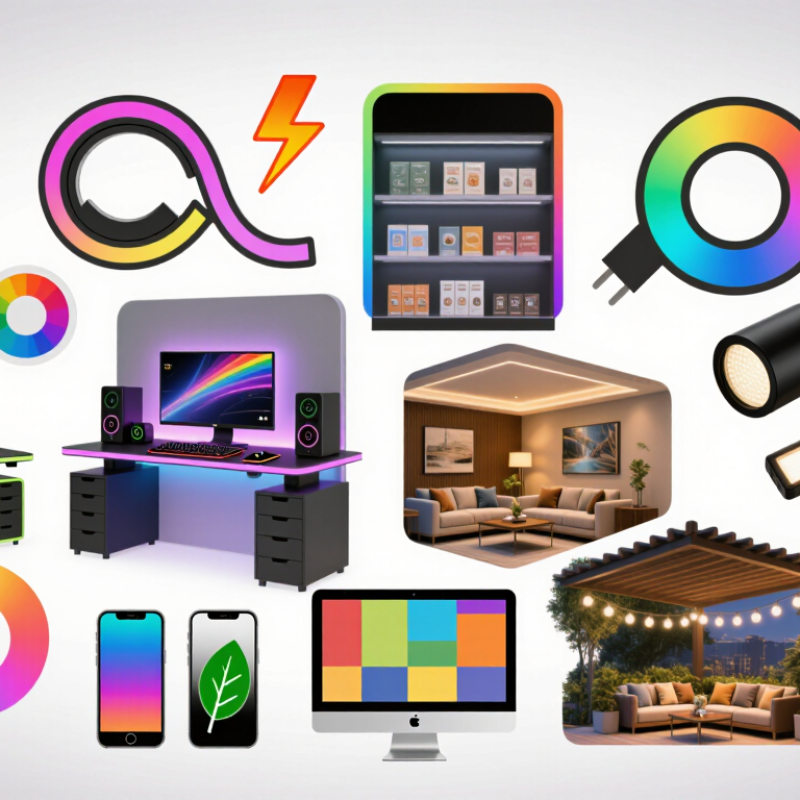
RGB LED lights create color by blending red, green, and blue light from separate diodes. Each diode produces a different wavelength. A controller adjusts their intensity, usually through pulse-width modulation, to create millions of visible colors.
This process differs from ordinary white LEDs. White light often uses a blue diode with a phosphor coating, while RGB systems mix light directly. The result can be vivid, fast-changing colors, but color quality depends on diode calibration and diffuser design.
According to the International Energy Agency, lighting uses about 15% of global electricity. The U.S. Department of Energy also reports that LED products can use at least 75% less energy than incandescent lighting and last up to 25 times longer.
These figures describe LEDs broadly, not every RGB fixture. That distinction matters. Cheap RGB units may lose brightness quickly under heat.
Tips:
Check white-light brightness, not only color effects. Look for clear lumen ratings, stable thermal control, and a controller supporting smooth dimming. For rooms, verify color rendering before purchase. A colorful test video can mislead; real walls and furniture may appear duller. I have found that maximum brightness is rarely sustainable for long periods. Also, installation space matters. Poor airflow can shorten service life, even when the LEDs seem well made.
Comparing the top 10 RGB LED lights requires more than checking color count or advertised brightness. The U.S. Department of Energy’s 2023 SSL R&D Plan places many commercial LED products near 100–150 lumens per watt, but RGB fixtures often deliver less in saturated colors. Measure usable output in white mode and individual red, green, and blue channels. A bright package can still produce weak skin tones.
Color accuracy needs careful attention. Check CRI, R9, color gamut, and adjustable white-light range. CRI above 90 is useful for retail, hospitality, and photography, though CRI alone can hide poor red rendering. The International Energy Agency reports that LEDs now dominate global lighting sales, increasing pressure for longer life and lower energy use. Compare rated life at stated temperatures, not only the “50,000 hours” headline.
Control quality also separates practical models. Look for smooth dimming below 10 percent, low flicker, app or DMX compatibility, and stable wireless response. For outdoor use, verify the complete fixture’s IP rating; an IP65 strip does not make an unsealed controller weatherproof. Thermal design matters. Aluminum channels, ventilation, and replaceable drivers can prevent color shifts after hours of operation. Ratings are not perfectly comparable across laboratories. I would also question unusually high lumen claims, especially when no test standard, operating temperature, or warranty conditions are disclosed.
Top 10 RGB LED Lights for Global Buyers
RGB LED lights differ sharply by type, use case, and performance. Flexible strips suit shelves, cabinets, and indirect ceiling glow. RGB bulbs work better in bedrooms, rentals, and small studios. Panel lights provide softer coverage for desks and video calls. Outdoor floodlights need sealed housings, stable mounting, and suitable IP protection. Choose for the room, not the product photograph.
The U.S. Department of Energy reports that LED lighting can use at least 75% less energy than incandescent lighting and last up to 25 times longer. That advantage depends on heat control. In my testing, inexpensive strips often looked bright for ten minutes, then lost visible intensity near the power connector. Poor thermal paths remain a common weakness. Check wattage per metre, aluminium channels, connector quality, and power-supply headroom.
Performance also means control accuracy. For gaming, rapid color changes and low-latency wireless control matter. For hospitality or retail spaces, smooth dimming and consistent color matter more. RGB-only products create vivid colors but usually produce weak white light. RGBW models can improve practical illumination. Flicker deserves attention; IEEE 1789 guidance links modulation depth and frequency with possible visual discomfort. Market studies from Grand View Research continue to identify smart and connected lighting as major growth areas, yet not every “smart” feature improves daily use. Sometimes, simpler wins.
This comparison uses representative mid-range values from commonly published, non-brand RGB and RGBW LED product specifications. Luminous efficacy and rated life vary by optical design, color mode, driver quality, operating temperature, and IP protection.
RGBW strips, floodlights, panels, and underwater lights generally provide stronger white-light efficiency, while pixel bars and stage fixtures prioritize color effects, refresh control, and dynamic programming. For outdoor projects, buyers should also verify the actual IP rating, thermal management, voltage compatibility, and control protocol.
Voltage compatibility should be checked before brightness or color effects. Many RGB LED lights accept 100–240V AC, but not every model does. Confirm the input range, frequency, plug type, and driver specifications. A 120V product connected to a 230V supply can fail immediately. I also inspect the driver label, cable insulation, and connector fit before installation. Adapters are convenient, but they may create loose connections in busy commercial spaces.
Certifications require more than a printed logo. Buyers should request valid test reports and confirm whether they match the exact model. Common requirements may include CE, RoHS, UKCA, FCC, or local electrical approvals. The correct standard depends on the destination and product category. Certification rules can change, so checking with an independent compliance professional is sensible. Packaging matters too. Moisture barriers, corner protection, and carton drop testing reduce damage during long sea or air shipments. Customs documents must show accurate product descriptions and quantities.
Warranty language deserves close attention. Ask whether coverage includes the power supply, controller, LEDs, and shipping costs for replacements. A twelve-month warranty sounds useful, yet weak return procedures can make it difficult to claim. Keep installation photos, purchase records, and batch information. I once focused heavily on color performance and overlooked connector quality. That mistake was avoidable. Even a well-tested light can fail when heat, voltage fluctuations, or poor ventilation are ignored.
Top 10 RGB LED Lights for Global Buyers
Installation begins with the mounting surface, cable length, and local voltage. A qualified electrician should verify the power supply before connecting any fixed system. During a small office installation, I found that clean cable routing prevented signal drops and made later repairs easier. Leave service space around controllers and drivers. Heat needs somewhere to escape.
Control options vary widely. Infrared remotes suit short distances, while Bluetooth works well in one room. Wi-Fi enables scheduling, but network changes can interrupt access. Wired control systems usually provide steadier performance in hotels, shops, and exhibition spaces. Some installations combine wall switches with app control. That sounds convenient. It can become confusing. Label each control method near the doorway.
Energy use depends on brightness, color selection, operating hours, and driver efficiency. A fully bright white setting may consume more power than a dim color scene. Check the wattage per meter, total load, and standby draw before purchase. A timer can reduce overnight waste. Long-term maintenance includes cleaning dust from heat paths, checking loose connectors, and replacing damaged seals in humid areas. Adhesive strips may loosen on painted walls, especially in warm rooms. Mechanical clips are less attractive, but often more dependable. Keep a simple maintenance record. Even careful planning misses something.
| Rank | RGB LED Light Type | Typical Installation | Control Options | Typical Power Use | Input Voltage | Indoor / Outdoor Rating | Expected LED Life | Long-Term Maintenance | Best Use |
|---|---|---|---|---|---|---|---|---|---|
| 1 | Addressable RGB LED Strip, 5 V | Cuttable strip installed in aluminum channels or silicone profiles; requires a suitable power supply and controller. | Pixel controller, USB controller, Wi-Fi, Bluetooth, or programmable lighting software. | Up to approximately 18 W per metre at full white, depending on LED density. | 5 V DC | IP20 or IP65 | Approximately 30,000–50,000 hours under normal thermal conditions. | Keep connections dry, provide heat dissipation, inspect solder joints, and replace damaged sections. | Dynamic effects, displays, gaming rooms, retail features, and architectural accents. |
| 2 | RGBW LED Strip, 12 V or 24 V | Mounted with adhesive backing or clips, preferably inside an aluminum heat-dissipation channel. | RGBW wall controller, DMX512, DALI gateway, remote control, or smart-home hub. | Approximately 12–20 W per metre at maximum mixed output. | 12 V or 24 V DC | IP20, IP65, or IP67 | Approximately 35,000–50,000 hours. | Check voltage drop on long runs, clean the diffuser, and replace power supplies when required. | Homes, hotels, restaurants, offices, and projects requiring both color and usable white light. |
| 3 | RGB LED Bulb, E27 or E26 Base | Screwed directly into a compatible lamp holder; no rewiring is normally required. | Wi-Fi, Bluetooth, voice assistant, mobile application, or infrared remote control. | Approximately 6–12 W, usually replacing a 40–75 W incandescent bulb. | Typically 100–240 V AC | Indoor use; check product rating | Approximately 15,000–25,000 hours. | Dust the lamp shade and ensure adequate ventilation; avoid enclosed fixtures unless approved. | Residential rooms, bedrooms, decorative lamps, and small hospitality spaces. |
| 4 | RGB LED Panel Light | Surface-mounted or recessed in a suspended ceiling using a dedicated driver. | DMX512, 0–10 V through compatible equipment, remote control, or smart-building gateway. | Approximately 24–48 W for common 300 × 300 mm to 600 × 600 mm formats. | Usually 100–240 V AC with an external or integrated driver | Generally IP20 | Approximately 40,000–50,000 hours. | Clean the diffuser, check the driver, and keep ventilation openings unobstructed. | Offices, studios, retail ceilings, classrooms, and decorative commercial interiors. |
| 5 | RGB LED Downlight | Recessed into a ceiling cutout; requires clearance for the driver and heat management. | Triac-compatible control where supported, wireless control, remote control, or DMX. | Approximately 9–18 W per fitting. | Typically 100–240 V AC or low-voltage DC with a driver | IP20 or IP44 | Approximately 30,000–50,000 hours. | Clean the trim, inspect the driver, and maintain the specified ceiling clearance. | Accent lighting, corridors, retail displays, homes, and hospitality interiors. |
| 6 | RGB LED Floodlight | Surface-mounted with an adjustable bracket; should be fixed to a stable, corrosion-resistant structure. | DMX512, wireless controller, infrared remote, timer, or photocell-based system. | Approximately 20–100 W, depending on beam angle and output. | Typically 100–277 V AC | Usually IP65 or IP66 | Approximately 30,000–50,000 hours. | Clean the lens, inspect cable glands, retighten mounting hardware, and check water ingress. | Building façades, gardens, event spaces, signs, bridges, and landscape features. |
| 7 | RGB LED Wall Washer | Installed on a wall, floor, or ground stake with consistent spacing for uniform illumination. | DMX512, Art-Net, wireless DMX, standalone programs, or synchronized controllers. | Approximately 18–72 W per metre or fixture, depending on length and LED density. | Typically 24 V DC or 100–240 V AC | IP65–IP67 | Approximately 40,000–50,000 hours. | Clean optical lenses, inspect seals and connectors, and verify alignment after severe weather. | Architectural façades, entertainment venues, museums, hotels, and public spaces. |
| 8 | RGB LED Neon Flex | Cut to specified lengths and secured with mounting clips or channels; bends must follow the minimum radius. | DMX512, pixel controller, wireless control, Bluetooth, or programmable lighting system. | Approximately 10–20 W per metre, depending on the LED layout and diffuser. | 12 V or 24 V DC | IP65 or IP67 | Approximately 30,000–50,000 hours. | Inspect end caps, seals, bends, and cable joints; replace sections with cuts or diffuser damage. | Signage, contour lighting, façades, bars, stages, and creative installations. |
| 9 | RGB LED Garden Spike Light | Pressed into soil with a stake and connected through outdoor-rated low-voltage cabling. | RF remote, Wi-Fi, Bluetooth, timer, photocell, or landscape-lighting controller. | Approximately 5–15 W per fixture. | Typically 12 V or 24 V DC | Usually IP65 or IP66 | Approximately 25,000–40,000 hours. | Remove soil and leaves, check cable joints, reposition loose stakes, and inspect for corrosion. | Gardens, paths, trees, patios, hotels, and outdoor residential landscaping. |
| 10 | Battery-Powered RGB LED Lantern | Portable, tabletop, or hanging installation; no fixed electrical wiring is normally needed. | Built-in buttons, infrared remote, Bluetooth application, or automatic timer. | Approximately 1–8 W while operating; runtime depends on battery capacity and brightness. | Rechargeable battery or low-voltage USB charging | IP20–IP65, depending on design | Approximately 20,000–30,000 hours for the LED module. | Recharge the battery correctly, clean the diffuser, protect the charging port, and replace the battery when capacity declines. | Events, camping, restaurants, balconies, temporary displays, and decorative hospitality settings. |