Top 10 Tips for Choosing the Best Led Light Strips?
Choosing the right LED light strips can be daunting. With so many options available, it's essential to understand what to look for. Industry expert Sarah Evans once stated, "Quality and versatility are key when selecting LED light strips." Her insight highlights the importance of making informed choices in this expansive market.
When considering LED light strips, think about brightness and color options. Different projects require specific lighting solutions. For example, a cozy living room may benefit from warm, dimmable strips. In contrast, a workspace might need brighter, cooler tones. Exploring these needs can significantly impact your final selection.
Additionally, quality matters. Not all LED light strips are created equal. Some may fail prematurely, losing their vibrant colors or brightness. This variability forces consumers to research and compare. Your investment deserves careful consideration. Keep in mind that even high-quality options might not suit every need. Thus, understanding personal preferences is crucial in this ever-evolving industry.
Understanding Different Types of LED Light Strips Available in the Market
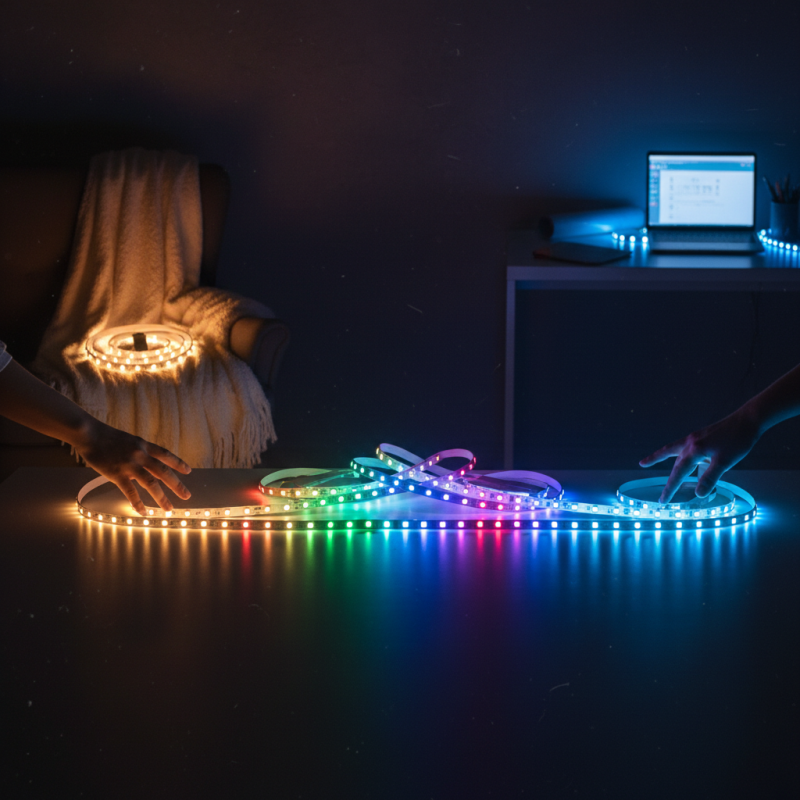
When exploring LED light strips, it's essential to understand the various types available in the market. LED strips can vary in color temperature, brightness, and flexibility. The two main types are RGB strips and monochrome strips. RGB strips allow for color changes, making them popular for mood lighting and décor. In contrast, monochrome strips emit a single color, ideal for task lighting or highlights.
A report from the U.S. Department of Energy reveals that LED lighting has improved energy efficiency by approximately 50% compared to traditional lighting systems. LED light strips can last up to 25,000 hours, proving to be a cost-effective choice. For instance, users looking for decorative lighting might favor the RGB options for their vibrant colors. Meanwhile, those needing bright, consistent light for workspaces may opt for a warm or cool white monochrome strip.
It's crucial to consider factors like lumens and wattage. While many consumers focus on aesthetics, brightness can be overlooked. A strip's brightness is measured in lumens per foot. Ideally, for effective illumination, users should look for at least 300 lumens. However, a brighter LED strip doesn't always mean better for every application. Understanding your needs can prevent the mismatched choices that lead to dissatisfaction later.
Top 10 Tips for Choosing the Best LED Light Strips
Identifying Key Features to Consider When Choosing LED Light Strips
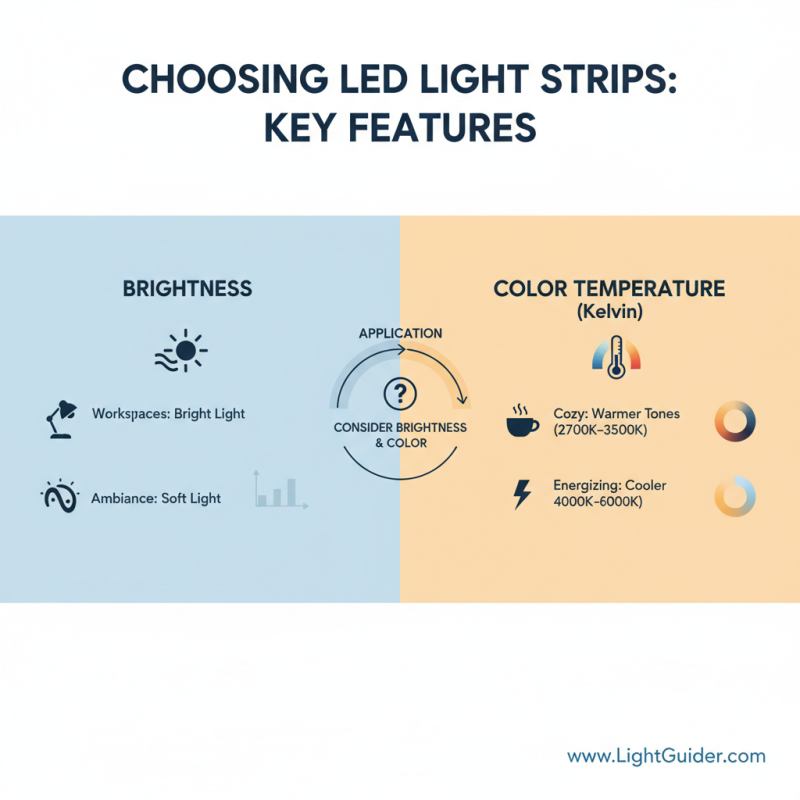
When selecting LED light strips, several key features are crucial for making the right choice. Brightness is one of them. Different applications require varying luminance levels. Consider how and where you will use the strips. For example, bright lighting works well in workspaces, while softer hues may be better for ambiance. Color temperature, measured in Kelvin, is another important factor. Warmer tones often create a cozy atmosphere, while cooler tones can energize.
Additionally, flexibility matters. Some LED strips can bend and twist, allowing for creative designs. This is especially useful for intricate installations. Length options also vary; longer strips allow for more extensive coverage. Pay attention to adhesive quality as well. A strong adhesive ensures your strips stay in place. Lastly, consider the power source. Battery-operated strips offer portability, while plug-in versions provide consistent brightness.
While these tips can guide your purchase, imperfections may arise during the installation. Uneven spacing and crooked lines may occur. Reflect on your setup process and make adjustments as needed. Choosing LED light strips should be about enhancing your space. So, take your time and enjoy the journey of transforming your environment with light.
Evaluating Color Temperature and Brightness for Your Space
When selecting LED light strips, color temperature and brightness are crucial factors. Color temperature is measured in Kelvin (K). A lower value, around 2700K to 3000K, emits a warm light, creating a cozy atmosphere. In contrast, higher values above 5000K generate a cooler, more vibrant light. According to a report by the Illuminating Engineering Society, the right color temperature can influence mood and productivity.
Brightness is measured in lumens. Higher lumens mean brighter light. For instance, 300 to 600 lumens are ideal for ambient lighting in living spaces. It's essential to match brightness with the intended use of the room. A study from the Light Research Center noted that spaces with insufficient lighting can induce feelings of fatigue. Thus, evaluating your space's lighting needs is critical.
Color temperature can also affect how colors appear. Warmer tones can make rooms feel inviting, while cooler tones may enhance focus. Choosing LED light strips that provide adjustable color temperatures could be beneficial. This flexibility allows for dynamic changes depending on activities or time of day. It's worth reflecting on how these variables can meet personal or professional needs effectively to create the desired environment.
Top 10 Tips for Choosing the Best Led Light Strips - Evaluating Color Temperature and Brightness for Your Space
| Tip Number |
Tip Description |
Color Temperature (Kelvin) |
Brightness (Lumens) |
| 1 |
Consider the purpose of the light strip |
3000K |
400 |
| 2 |
Choose the right color temperature for your mood |
4000K |
600 |
| 3 |
Evaluate the brightness needed for the area |
5000K |
800 |
| 4 |
Test light strip flexibility for installation |
2700K |
500 |
| 5 |
Check the lumen output per foot |
6500K |
900 |
| 6 |
Look for energy efficiency ratings |
3500K |
700 |
| 7 |
Consider dimmability options |
4000K |
850 |
| 8 |
Ensure compatible voltage and power supply |
5000K |
750 |
| 9 |
Explore color options for design preferences |
6000K |
950 |
| 10 |
Read customer reviews and ratings |
3000K |
600 |
Assessing Installation Requirements and Flexibility of LED Light Strips
When choosing LED light strips, installation requirements play a crucial role. First, assess the space where you plan to install these lights. Flexible LED strips can adapt to various surfaces. For instance, they can curve around furniture or stretch along walls. This adaptability enhances their appeal. A report from the Lighting Research Center indicates that over 70% of consumers prefer flexible options for complex installations.
Consider the power source and connectivity. Not all LED strips require the same voltage. Some run on 12V, while others need 24V. Ensure the power supply can meet these needs. A lack of attention here can lead to inconsistent lighting performance. Additionally, consider the adhesive backing. It should be strong yet removable. Data from industry surveys suggest that 45% of users report issues with strip adhesion over time.
Installation locations can dictate the choice of LED strip. Areas with high humidity or exposure to splashes may need weatherproof options. During installation, paying attention to tight corners and angles is essential. Mistakes in this phase can lead to uneven light distribution. Some users report that poorly installed strips have left dark patches. Flexibility and installation requirements are essential, but remaining vigilant during setup is equally important.
Comparing Cost and Durability for Long-Term Use of LED Light Strips
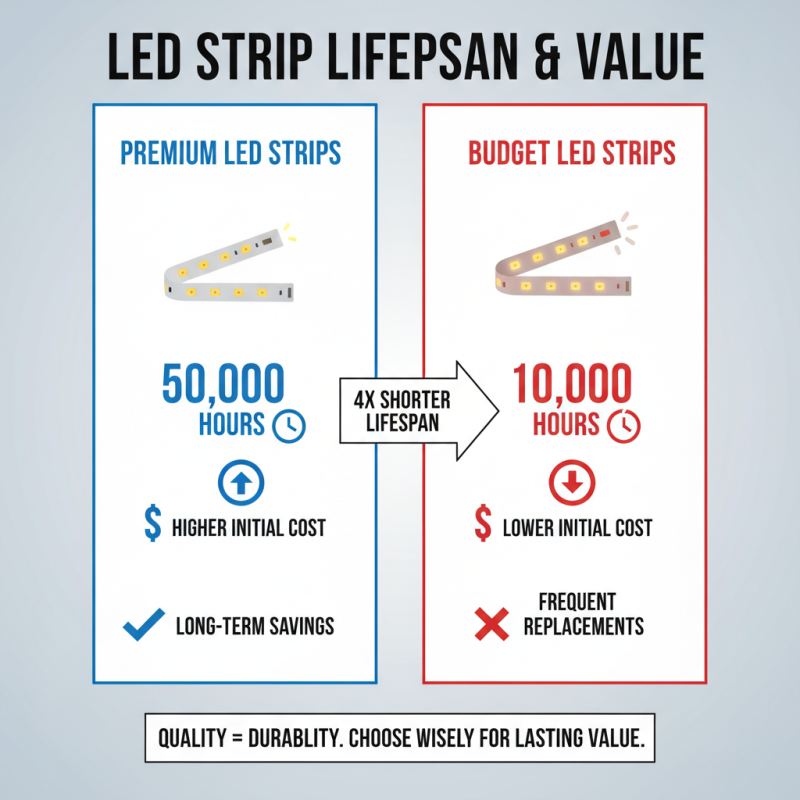
When choosing LED light strips, cost and durability are key factors for long-term use. According to industry reports, quality LED strips can last up to 50,000 hours. However, cheaper options may only last 10,000 hours. This significant difference in lifespan should be a primary consideration.
Cost is not just about the purchase price. Durable LED strips may have a higher upfront cost, but they save money over time. A report from the Department of Energy indicates that LED lights can save consumers about 75% on energy costs. Thus, investing in higher-quality strips can result in long-term savings.
Another crucial aspect is the warranty. Many reputable manufacturers offer warranties lasting from 2 to 5 years. A solid warranty often indicates confidence in product longevity. Yet, beware of too-good-to-be-true deals. Some low-cost light strips come with minimal or no warranties, raising red flags about their durability. Evaluating these factors thoroughly is essential for making informed choices.