2026 Top LED Neon Lights for Global Buyers?
In 2026, Led Neon Lights are moving beyond decorative signage. Retailers, hospitality brands, event designers, and residential buyers now expect brighter output, safer materials, and lower operating costs. The U.S. Department of Energy reports that LED products can use at least 75% less energy than incandescent lighting and last up to 25 times longer. That benchmark matters when a storefront operates for twelve hours every day.
Market momentum also supports closer product evaluation. Grand View Research identifies LED lighting as a major global growth market, driven by energy efficiency, smart controls, and declining component costs. Meanwhile, the International Energy Agency continues to highlight efficient lighting as an important path for reducing electricity demand. These reports do not measure every neon-flex application directly. However, they provide useful context for buyers comparing illuminated signs, architectural accents, and commercial installations.
The best 2026 options should be judged by more than brightness or attractive photographs. Buyers need to check silicone quality, bending radius, color consistency, heat management, IP rating, voltage compatibility, and power-supply reliability. Indoor and outdoor projects require different protection levels. Certification requirements also vary between destinations, so UL, ETL, CE, RoHS, or other documentation should be verified carefully, not assumed from a logo.
Small details matter.
A warm white strip may look elegant in a restaurant but appear dull in a retail window. A low-cost controller may create visible flicker, especially on cameras. Warranty terms, spare parts, packaging strength, and installation instructions deserve equal attention. This category is not perfectly standardized, and some rankings oversimplify real-world performance. Global buyers should compare tested specifications, supplier experience, and after-sales support before choosing the Led Neon Lights that fit their project.
What Are LED Neon Lights and How Do They Work?
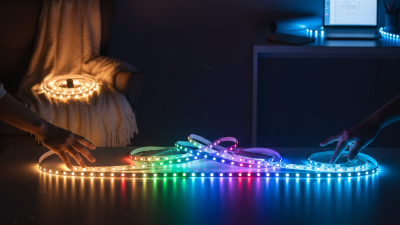
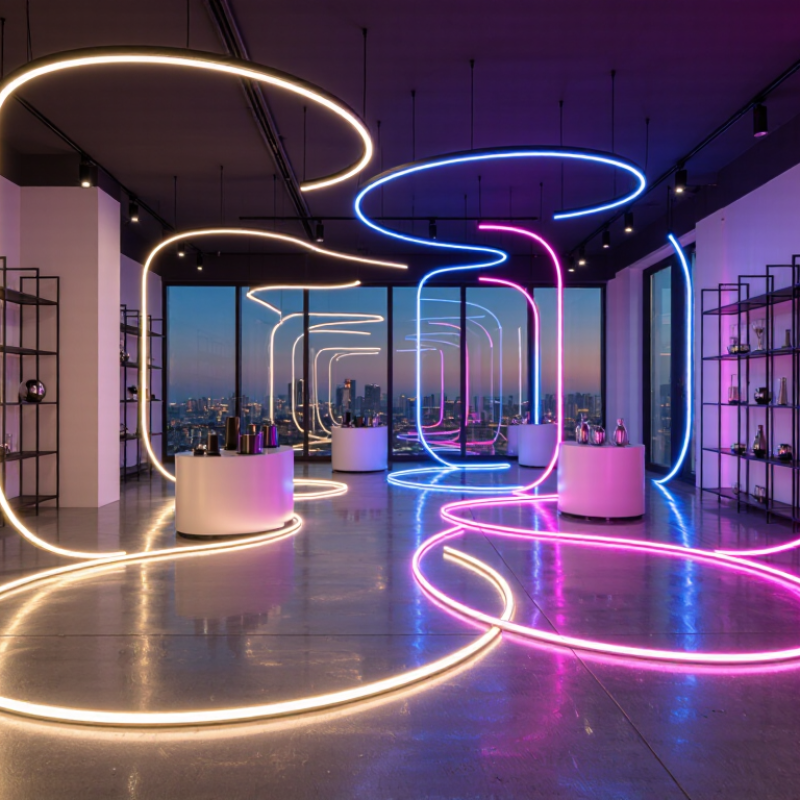
LED neon lights are solid-state lighting products, not glass tubes filled with neon gas. A flexible circuit places light-emitting diodes along a 12V or 24V strip. A driver converts mains AC into stable DC power. The LEDs then release photons when electrons cross a semiconductor junction. A silicone diffuser spreads those points into a continuous glow.
The outer silicone body shapes the light and protects the circuit. Bending direction matters. Tight curves can stress the strip, create dark spots, or damage solder joints. For outdoor use, buyers should check the declared IP rating and installation method. The U.S. Department of Energy reports that LED lighting uses at least 75% less energy and can last up to 25 times longer than incandescent lighting. These figures support efficiency claims, but they do not guarantee every neon product will perform equally.
Grand View Research estimated the global LED lighting market at approximately USD 78 billion in 2023. That figure covers many LED products, not neon lighting alone, so it should not be treated as a direct neon-market measurement. I still find this distinction important. A bright sample may hide poor heat control, uneven color, or an underrated power supply. Buyers should request photometric data, power consumption per meter, color temperature, warranty terms, and test documentation. Small details often decide whether a sign stays vivid after months of daily operation.
Which LED Neon Light Types Will Lead the Global Market in 2026?
Which LED Neon Light Types Will Lead the Global Market in 2026?
In 2026, flexible silicone LED neon will likely lead global demand. Its smooth light diffusion, low-voltage operation, and resistance to moisture suit retail, hospitality, and outdoor signage. Top-bend profiles fit straight lettering, while side-bend profiles follow curves and circular logos. Outdoor demand is rising. IP67-rated housings should remain common where rain, dust, and frequent cleaning are expected.
The International Energy Agency’s Energy Efficiency 2024 report states that LEDs represent more than half of global lighting sales. Grand View Research also forecasts strong growth for the wider LED lighting market through 2030. These figures support continued investment in efficient neon systems, but they do not identify one universal winner. Market forecasts use different definitions. That gap matters.
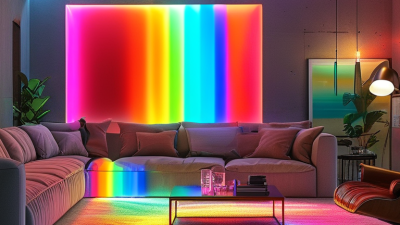
RGB and RGBW neon will gain attention in entertainment venues and immersive interiors. Addressable versions can create moving effects, although installation becomes more complex. Static single-color neon should remain stronger for storefronts because it is easier to specify, repair, and operate. MarketsandMarkets reported rapid expansion in smart lighting through 2029, supporting connected neon controllers and app-based scheduling. Still, connectivity can add failure points. Buyers should check bending radius, heat control, voltage drop, color consistency, and replacement availability before choosing a type. In my view, the leading 2026 product will balance visual impact with simple maintenance, not merely offer the most colors.
How to Compare Brightness, Energy Use, Safety, and Lifespan
2026 Top LED Neon Lights for Global Buyers
When comparing LED neon lights, start with measured brightness, not advertised wattage. Request lumens per metre, colour temperature, and test conditions. The U.S. Department of Energy reports that quality LED products commonly deliver over 80 lumens per watt. However, silicone diffusion can reduce visible output. A bright sample may look weaker after installation. Compare the same length, colour, and viewing distance.
Energy use needs a simple calculation: watts per metre multiplied by total metres and daily operating hours. ENERGY STAR reports that LEDs use at least 75% less energy than incandescent lighting and can last up to 25 times longer. These figures describe broad LED categories, not every neon strip. Ask for measured input power at the rated voltage. A 24-volt system can reduce voltage drop across longer runs, but it still needs correctly sized wiring and a suitable power supply.
Safety is less visible, yet more important. Check conformity with IEC 60598-1 or the relevant national standard, plus electrical test documentation. For outdoor projects, verify the IP rating after connectors are installed, not only on the light tube. Lifespan claims should reference LM-80 data or lumen-maintenance testing. “50,000 hours” can be misleading when heat, bending, moisture, and power quality are ignored. I would test a sample overnight before ordering in bulk. That extra step is easy to skip. It may prevent an expensive replacement cycle.
2026 Top LED Neon Lights for Global Buyers
How to Compare Brightness, Energy Use, Safety, and Lifespan
The chart uses a comparative score from 0 to 100, where higher values indicate a stronger overall buying advantage. The score combines representative mid-range specifications commonly published for commercial LED neon flex products, without using company or brand data.
| LED Neon Type |
Brightness |
Power Use |
Safety Rating |
Rated Life |
| Standard 12V Side-Emitting |
1,800–2,500 cd/m² |
8–12 W/m |
IP65–IP67 |
30,000–50,000 hours |
| Standard 24V Front-Emitting |
2,500–3,500 cd/m² |
10–14 W/m |
IP67 |
50,000 hours |
| High-Output 24V |
3,500–5,000 cd/m² |
12–18 W/m |
IP67–IP68 |
50,000 hours |
| RGB/RGBW Addressable |
1,500–3,000 cd/m² |
10–16 W/m |
IP65–IP67 |
30,000–50,000 hours |
Safety should also be verified through operating voltage, heat dissipation, flame-retardant materials, cut-section sealing, and certification requirements applicable in the destination market.
What Standards and Certifications Should Global Buyers Check?
For global buyers, LED neon lighting should be checked as a complete electrical system, not only as a bright decorative product. Ask for the exact model number, rated voltage, power consumption, materials, and installation instructions. A certificate without matching model details may offer little protection.
In Europe, verify applicable CE requirements, including electrical safety, electromagnetic compatibility, and RoHS substance restrictions. Check whether testing follows relevant IEC or EN standards, such as IEC 60598 for lighting equipment and IEC 60529 for IP protection. CE is a manufacturer’s declaration, not always an independent quality certificate. That distinction matters. For North American projects, request certification from an accepted testing body and confirm the product’s applicable UL or CSA requirements. Other markets may require local marks, import documents, or energy information.
Outdoor buyers should inspect the IP rating, cable structure, connector sealing, and power supply certification. IP67 does not mean the product can survive every installation condition. Water can still enter through a poorly sealed joint. Ask for test reports, factory inspection records, sample labels, and warranty terms. Confirm that the report covers the final production version, not an earlier sample. A supplier may provide attractive paperwork, but mismatched components remain a real risk. Independent verification costs time, yet skipping it can create higher replacement and compliance expenses. I would also request a small production sample, because printed specifications sometimes fail to reflect field performance.
How to Select Reliable LED Neon Light Suppliers for Different Markets
2026 Top LED Neon Lights for Global Buyers
Selecting a reliable LED neon light supplier requires more than comparing online prices. Ask for product samples, factory details, test reports, and clear warranty terms. Experienced buyers should inspect silicone flexibility, light uniformity, connector quality, and power supply stability. A smooth surface matters. Small defects become obvious in restaurants, shops, and outdoor displays.
Market conditions also influence the right supplier. European projects may require stronger documentation and energy information. Tropical markets need moisture-resistant construction, while colder regions require flexible materials that resist cracking. Confirm voltage, plug standards, packaging strength, and installation guidance before placing a large order. Request third-party testing when possible. Supplier claims are not always enough.
Tips: Test one sample for seven days before mass production. Bend it repeatedly, check brightness, and measure heat. Ask how replacement parts are handled. A supplier who answers slowly may still produce well, but poor communication creates costly delays. I once underestimated packaging quality; several tubes arrived with bent corners. That mistake changed my inspection checklist. Also review production capacity during peak seasons, because promised lead times can become unrealistic. Choose evidence over attractive promises.