What Are Color Changing Lights and How Do They Work?
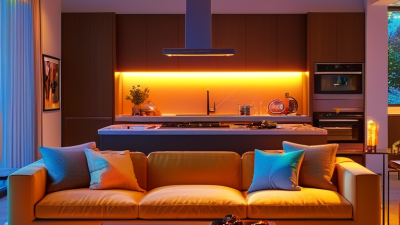
Color-Changing Lights have moved beyond novelty décor. They now shape bedrooms, restaurants, studios, gardens, and smart homes. Behind each glowing panel, LED chips combine red, green, and blue light. Some advanced fixtures add white LEDs for softer tones and better everyday visibility.
The basic process is surprisingly precise. A controller adjusts each LED channel’s intensity, often through pulse-width modulation. Rapid changes create colors that appear smooth to the human eye. Wireless systems may use Bluetooth, Wi-Fi, or dedicated remotes. Sensors can also respond to sound, motion, or daylight. In practical use, I have found that placement matters as much as brightness. A strip hidden behind frosted plastic produces gentle color. The same strip exposed directly can feel harsh and uneven.
Lighting researcher Dr. Mariana Figueiro has stated, “Light is the most powerful synchronizer of the human circadian system.” This reminder matters when choosing Color-Changing Lights for bedrooms or evening spaces. Blue-rich, bright settings may feel energetic, yet they can be unsuitable before sleep. Warm amber tones are usually more comfortable at night, although individual responses differ.
This guide will examine how these lights mix color, communicate with controllers, and change brightness. It will also consider color accuracy, energy use, installation, and safety. Some marketing claims sound impressive. They deserve careful testing. A colorful effect is not automatically useful lighting. The best system balances visual appeal, control, comfort, and reliable performance. Mistakes happen, especially when specifications are unclear. That is why real-world testing remains essential.
What Color-Changing Lights Are: RGB, RGBW, Tunable White, and CCT
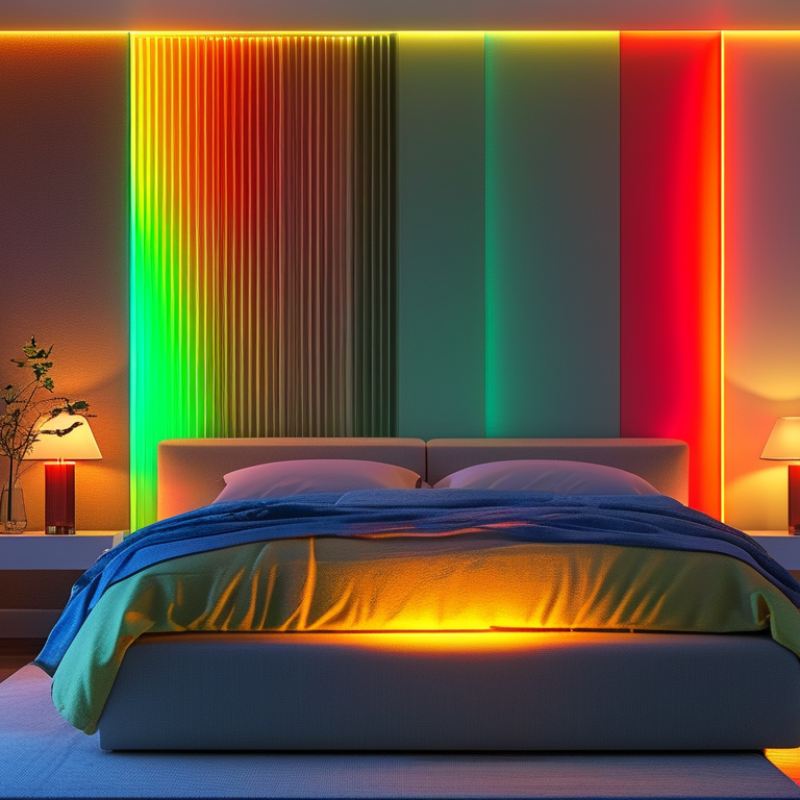
Color-changing lights use LED emitters to create different colors and white tones. A controller changes the electrical output sent to each diode. The light then blends through a diffuser or reflects across a room. RGB lights combine red, green, and blue channels. Red, green, blue. By adjusting their brightness, they produce vivid colors such as purple, cyan, and amber. RGB works well for decorative scenes, gaming areas, and accent lighting. However, its white setting can look slightly cold or gray.
RGBW adds a dedicated white LED to the RGB arrangement. This usually creates cleaner white light and better brightness for everyday use. Tunable white lights take a different approach. They mix warm and cool white LEDs instead of focusing on saturated colors. CCT, or correlated color temperature, describes the appearance of that white light. Lower CCT values look warm, like candlelight. Higher values appear cooler and more blue, like an overcast sky. A reading corner may suit 3000K, while a workshop may need 4000K or above.
The choice depends on the room’s purpose, surface colors, and desired mood. A diffuser can soften visible diode points. Good control systems also fade gradually, avoiding sudden brightness changes. Still, no system is perfect. RGBW may offer weaker color saturation than RGB. Tunable white cannot create strong red or blue scenes. I would test the light at night, because specifications rarely show the whole experience. Overly cool light can feel harsh against white walls. Personal comfort matters as much as technical range.
What Are Color-Changing Lights and How Do They Work?
A comparison of RGB, RGBW, Tunable White, and CCT lighting systems by independently controlled LED channels
RGB lights typically use three independently controlled channels: red, green, and blue. RGBW adds a dedicated white channel, improving white-light quality and efficiency. Tunable White systems generally use warm-white and cool-white channels to adjust the apparent color temperature. CCT lighting uses the same two-channel warm-to-cool white principle, with color temperature commonly expressed in Kelvin, such as approximately 2700K for warm white and 6500K for cool daylight white.
How LEDs Generate Color Through Red, Green, and Blue Light Channels
What Are Color Changing Lights and How Do They Work?
Color changing lights usually create color through red, green, and blue LED channels. Each channel produces a different portion of visible light. The light controller adjusts their intensity, then combines them through additive color mixing. Red and green can form yellow. Blue and green can create cyan. When all three channels shine strongly, the result appears white.
Most systems control brightness using pulse-width modulation, or PWM. The LED switches on and off rapidly, while your eyes perceive an average brightness. For example, a dim red channel may flash for shorter periods than a bright red channel. This method saves energy, but some people may notice flicker during slow-motion video or sensitive visual tasks. Color accuracy also depends on the LED’s design, diffuser, surrounding wall color, and viewing angle. RGB light is flexible, but it cannot reproduce every natural color perfectly. That limitation is easy to overlook.
Tips: Choose a diffuser for smoother blending and softer shadows. Keep the light away from direct eye level. Test warm and cool settings in the actual room, because painted walls can change the perceived color. Lower brightness often improves comfort, though the ideal setting varies. A separate white channel may produce cleaner white light than mixing red, green, and blue alone. This explanation simplifies complex optics, so real results deserve careful testing.
What Are Color Changing Lights and How Do They Work? - How LEDs Generate Color Through Red, Green, and Blue Light Channels
Representative RGB LED characteristics and additive color-mixing examples. Wavelengths and optical output vary by LED design.
| Data Dimension |
Red Channel |
Green Channel |
Blue Channel |
How the Channels Work Together |
| Light type |
Visible red light produced by a red LED die |
Visible green light produced by a green LED die |
Visible blue light produced by a blue LED die |
The three channels combine through additive color mixing |
| Approximate visible wavelength range |
620–750 nm |
495–570 nm |
450–495 nm |
The human eye interprets the combined spectrum as a perceived color |
| Typical LED peak region |
Approximately 620–660 nm |
Approximately 515–540 nm |
Approximately 450–480 nm |
Peak wavelength affects hue, saturation, and the resulting white-point balance |
| RGB control value |
R = 0–255 |
G = 0–255 |
B = 0–255 |
An 8-bit RGB value uses 256 intensity levels per channel |
| Typical electrical control method |
Current regulation or PWM duty-cycle control |
Current regulation or PWM duty-cycle control |
Current regulation or PWM duty-cycle control |
PWM changes average channel intensity by switching the LED rapidly on and off |
| Channel at zero intensity |
No red contribution |
No green contribution |
No blue contribution |
Only the remaining active channels affect the perceived color |
| Single-channel example |
RGB (255, 0, 0): red |
RGB (0, 255, 0): green |
RGB (0, 0, 255): blue |
One active channel produces a primary additive color |
| Two-channel additive mix |
Red + green |
Green + blue |
Blue + red |
Red + green = yellow; green + blue = cyan; blue + red = magenta |
| All-channel additive mix |
Contributes long-wavelength light |
Contributes middle-wavelength light |
Contributes short-wavelength light |
RGB (255, 255, 255) is intended to produce white light, although the exact tint depends on LED spectra and intensity balance |
| Illustrative RGB setting |
RGB (255, 40, 20): warm red-orange |
RGB (40, 255, 80): vivid green |
RGB (40, 80, 255): vivid blue |
Intermediate channel values create a broad range of perceived hues and brightness levels |
| Main factors affecting the final color |
Peak wavelength, drive current, optical efficiency, and thermal conditions |
Peak wavelength, drive current, optical efficiency, and thermal conditions |
Peak wavelength, drive current, optical efficiency, and thermal conditions |
LED spectral power, diffuser material, PWM balance, viewing angle, and surrounding light all influence the perceived result |
How 8-Bit RGB Control Produces More Than 16.7 Million Colors
What Are Color Changing Lights and How Do They Work?
Color-changing lights commonly use red, green, and blue LED channels. Each channel receives an 8-bit digital value from 0 to 255. That creates 256 brightness levels per color. When the controller combines them, the theoretical total becomes 256 × 256 × 256, or 16,777,216 colors. This is the familiar “more than 16.7 million colors” claim.
The controller adjusts each channel through pulse-width modulation, switching LEDs rapidly to control perceived brightness. A value of 255 means full output, while 128 produces roughly half the duty cycle. Red, green, and blue light blend inside the eye, creating colors such as violet, amber, or soft cyan. The result is mathematical, but not perfectly visual. LED binning, optics, heat, and driver accuracy can reduce the usable color range. That explanation is useful, but incomplete. Human vision also judges brightness unevenly across colors.
The International Energy Agency reports that LED lighting can use up to 75% less electricity than incandescent lighting. U.S. Department of Energy solid-state lighting reports also identify color quality and intelligent controls as major development priorities. However, saturated RGB output may deliver fewer lumens than white light, so efficiency comparisons need care.
Tips:
Choose fixtures with separate channel control and calibrated dimming. Test skin tones and white settings, not only vivid effects. A tiny color shift can become obvious on a wall.
How Color Accuracy, CRI, CCT, and Power Ratings Affect Performance
Color-changing lights combine separate LED channels, usually red, green, and blue, to create adjustable hues. Some also add white LEDs for better brightness and natural-looking light. A controller changes each channel’s current, like mixing paint with invisible electrical sliders. In practical testing, two lamps set to “warm white” can look noticeably different. The reason is simple: their spectral output is not identical.
Color accuracy depends on more than appearance. CRI measures how naturally selected colors appear, but it can overlook saturated red tones. The Illuminating Engineering Society’s TM-30 method adds Rf fidelity and Rg gamut metrics, offering a broader evaluation. A high CRI value is useful, not perfect. CCT describes visual warmth, from amber-like 2700 K to cool daylight near 6500 K. The U.S. Department of Energy’s Solid-State Lighting reports stress that consistent chromaticity remains important for reliable LED performance. Small CCT shifts can change the mood of a room.
Power ratings also need careful reading. A 12-watt fixture may draw less energy than its maximum rated load, depending on the selected color and brightness. ENERGY STAR technical guidance reports that qualified LED lighting can use at least 75% less energy than incandescent lighting. That figure is compelling, but real savings depend on operating hours and controls. My initial assumption was that higher wattage meant stronger color. It does not. Optical design, heat control, diffuser quality, and channel balance can matter more. Short tests can mislead. Evaluate the light after warm-up, at several colors, and at its intended viewing distance.