What Are the Top Party Lights for 2026?
The best Party Lights for 2026 will do more than flash brightly. They will shape mood, movement, and memorable moments.
This guide examines LED uplights, pixel bars, moving heads, laser-free projectors, and weather-resistant outdoor fixtures. Each option is judged by color quality, beam control, setup time, heat output, power use, and app reliability. A light that looks impressive online may feel harsh in a small living room. That difference matters.
Light artist James Turrell once said, “Light is not so much something that reveals, as it is itself the revelation.” His words apply to party design. Good Party Lights can turn a plain wall purple, make a dance floor feel deeper, or soften a crowded venue with warm amber tones. The effect should feel intentional, not chaotic.
Real-world testing also exposes weaknesses. Some budget fixtures advertise thousands of colors but produce weak whites. Others rely on unstable Bluetooth connections. A few become uncomfortably hot after several hours. These flaws are easy to overlook.
Not every popular model deserves a top ranking. Sometimes, simpler equipment performs better.
Our comparison focuses on practical use, including birthday parties, weddings, home gatherings, small venues, and outdoor celebrations. We consider brightness, control options, mounting flexibility, sound-reactive performance, and responsible electrical use. Readers will find strong choices for different budgets, spaces, and technical abilities. The final recommendations remain open to revision, because lighting technology changes quickly and user experience can challenge even the most convincing specifications.
Party Light Types and Their Best Uses in 2026
What Are the Top Party Lights for 2026?
Party lighting in 2026 is less about one spectacular fixture. It is about matching light behavior to the room, audience, and power plan. Grand View Research forecasts a 10.5% compound annual growth rate for the LED lighting market from 2025 through 2030. The U.S. Department of Energy reports that LEDs use at least 75% less energy than incandescent lamps. They also last up to 25 times longer. These figures support efficient, controllable lighting for repeated events.
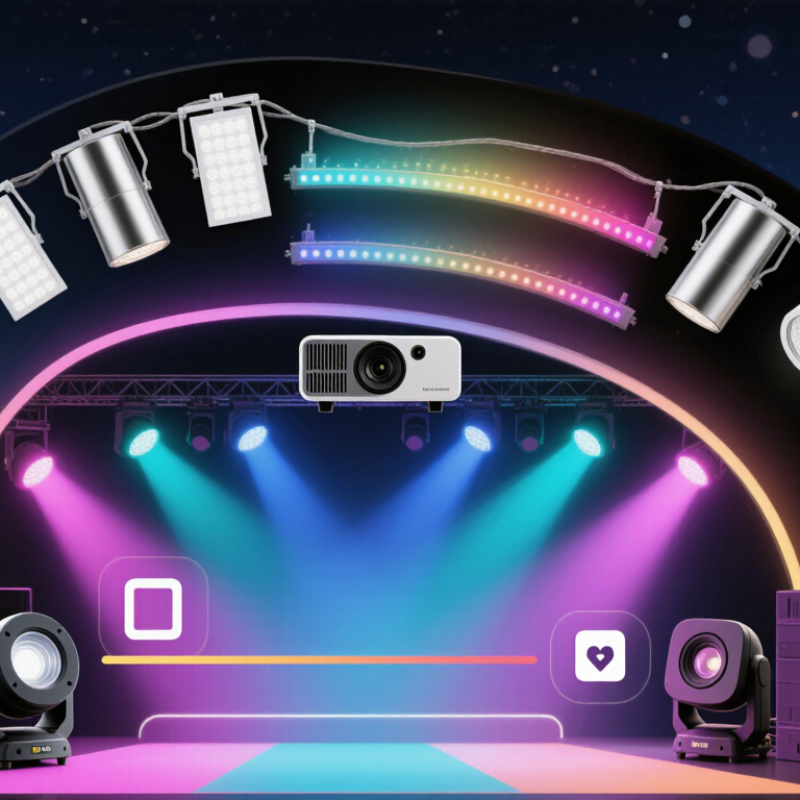
LED PAR and wash lights create broad color on walls, ceilings, and small stages. They work well for birthdays, lounges, and mobile setups. Moving heads add sweeping beams and focused patterns for larger dance floors. Pixel bars produce segmented color effects behind DJs or along stage edges. Battery uplights reduce cable problems in historic rooms and outdoor receptions. Wireless runtime is easy to overestimate. Test it at full brightness.
In a real venue, I check beam angle, brightness, flicker performance, and heat before choosing fixtures. Cameras can expose flicker that guests barely notice. For food-focused events, higher color rendering helps dishes and skin tones look natural. Outdoor fixtures need suitable ingress protection ratings, not hopeful packaging claims. Keep it simple. I have overlit small rooms before. The result looked energetic, but faces disappeared. More output is not always better.
What Are the Top Party Lights for 2026?
Party light types and their best uses, compared by typical coverage and power consumption. Values are general specifications commonly found across consumer and professional lighting equipment; actual performance varies by model and venue conditions.
How to choose: LED PAR uplights work well for walls and mood lighting, moving heads create dynamic beams for dance floors, laser lights suit energetic club-style effects, derby lights provide wide multicolor patterns, strobes are best for short bursts of dramatic impact, and LED projectors are useful for themed visuals and ambient decoration.
Key Features That Define High-Quality Party Lights
What Are the Top Party Lights for 2026?
High-quality party lights begin with controlled brightness, not maximum output. A useful fixture should create layered color without flattening faces or causing eye fatigue. The U.S. Department of Energy reports that modern LED systems can deliver over 100 lumens per watt, but efficiency alone does not guarantee a pleasant room. Check color rendering, dimming smoothness, and beam spread. Brightness is not everything. A high color rendering index helps skin tones and food appear more natural, especially during close indoor events.
Flicker control is equally important. Poorly designed drivers may create visible or camera-visible modulation, producing headaches or striped video footage. The IEEE 1789 guidance offers a practical reference for reducing LED flicker risks, while IEC 62471 addresses photobiological safety. Look for adjustable speed, stable low brightness, and tested light output. I have found that a light can look impressive for ten minutes, then feel harsh after an hour. Heat matters. Aluminum housing, ventilation, and thermal protection help preserve color consistency and service life.
Safety and control features define the better choices for 2026. The International Energy Agency notes that lighting represents about 15% of global electricity use, making efficient operation worthwhile. Choose timers, automatic shutoff, low-power modes, and replaceable or responsibly rechargeable batteries. For outdoor use, verify the actual IP rating instead of trusting vague “weatherproof” wording. Wireless control is convenient, but manual controls should remain available when connections fail. No specification predicts every room. Test the fixture at eye level, across a real wall, and beside ordinary furniture before committing.
How to Compare Brightness, Color, Effects, and Coverage
Choosing top party lights for 2026 requires more than chasing the highest lumen number. Brightness should match the room, ceiling height, and audience distance. I compare measured output at three and six meters, using a light meter when possible. A powerful beam can look impressive near a wall but feel weak across a crowded room. My early tests often favored maximum brightness, but that created glare and tired eyes.
Color quality changes the atmosphere. Look for smooth dimming, rich red and blue tones, and neutral white light for setup. A high color-rendering rating helps objects and skin tones appear more natural. Some lights advertise many colors but produce muddy transitions. I check fade speed, color consistency, and whether the controls respond without visible flicker. Small details matter.
Effects should serve the music, not overwhelm it. Adjustable speed, beam width, and pattern movement offer more control than a crowded effects list. Coverage depends on beam angle and placement. A narrow beam creates sharp accents, while a wider beam fills a dance area more evenly. For a 20-square-meter room, one central fixture may leave dark corners; two units placed apart usually create better balance. I still measure the actual floor pattern, because advertised coverage can be optimistic. Cable length, heat, noise, and stable mounting also deserve attention. A dazzling light is less useful when it distracts guests or needs constant adjustment.
Safety, Setup, and Smart Controls for Modern Party Lighting
What are the top party lights for 2026? Safety should guide the choice before color, brightness, or effects. The U.S. Department of Energy reports that LED lighting uses at least 75% less energy than incandescent lighting. It also lasts up to 25 times longer. Choose low-heat LED fixtures with enclosed wiring and stable, weighted bases. Avoid placing cables across doorways or beneath rugs. Keep it cool.
The National Fire Protection Association’s 2024 report recorded an average of 155 home fires involving Christmas trees each year from 2018 to 2022. Although party lighting differs, overloaded outlets and damaged cords create similar risks. Use certified products, inspect every cable, and connect only the recommended number of light sets. A residual-current protection device adds another practical safeguard. My own setup mistake was ignoring cable length. The lights looked tidy, but the extension connection became warm.
Smart controls now make party lighting easier to manage. Industry projections from MarketsandMarkets estimate the smart lighting market could grow from about 13.4 billion dollars in 2023 to 31.7 billion dollars by 2028. Voice control, scheduled shutoff, dimming, and motion settings can reduce unnecessary operation. Select systems with local controls, password protection, and clear privacy settings. Test the network before guests arrive. A failed connection should not leave lights permanently on. Manual control still matters. It is less impressive, but more dependable.